


Warships in the Caribbean, Closed Doors in Brasília

What Is Washington Preparing For?
eyesonbrasil
On Friday, two days before Brazil’s presidential election, the American flag still flew over the embassy in Brasília, but the visa windows were shut. Australia closed its own embassy that same day. Hundreds of miles to the north, American warships have spent more than a year patrolling Caribbean waters. Is that coincidence, coordination or two separate stories? The evidence supports a more careful answer than either the alarmist or the dismissive version.
First, the facts of Friday
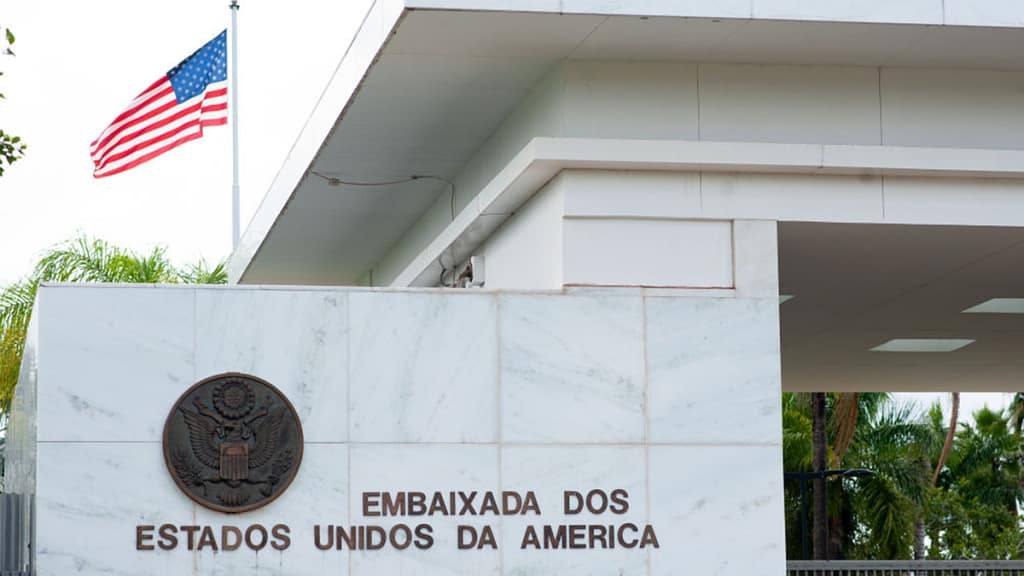
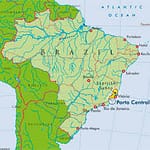
The premise needs a small correction. The U.S. Embassy in Brasília and its consulates in São Paulo, Rio de Janeiro, Recife and Porto Alegre remain structurally open. It was the consular windows that closed, covering visas, passports and American citizen services. Australia’s case was different: its ambassador said the embassy in Brasília would close on Friday for security reasons, citing the U.S. alert.
The stated reason was security. Brazil’s federal police executed search and seizure warrants in São Paulo and the Federal District in an investigation of suspected plans that could threaten U.S. diplomatic facilities. But according to one report, police found no evidence corroborating the reported threat and identified no suspects. Washington has not said what the threat was, and it has not said whether it relates to the election.
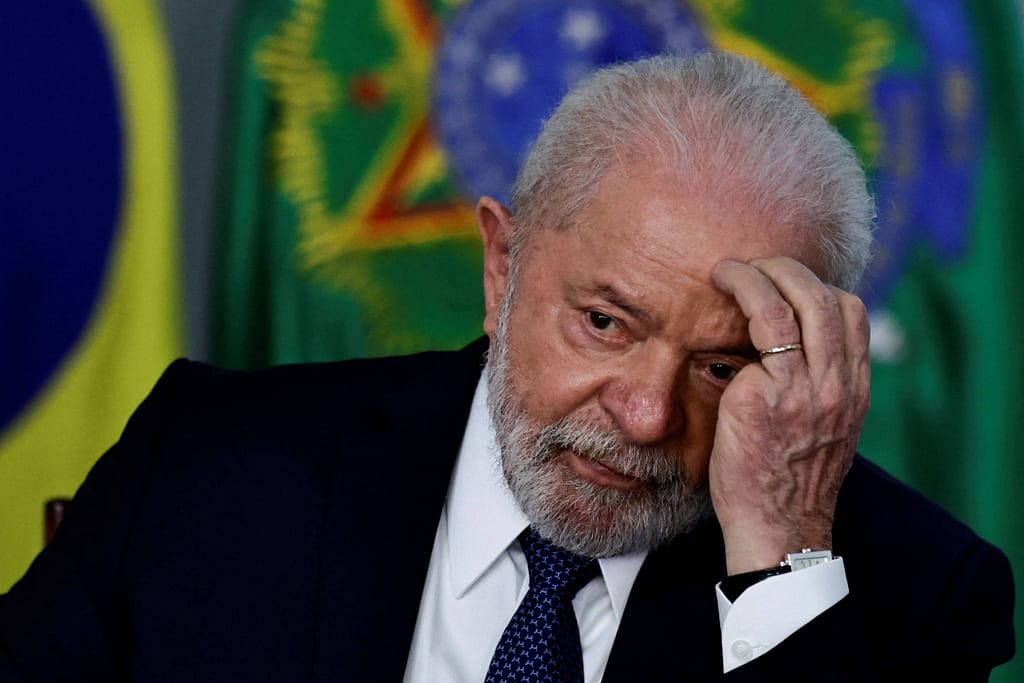
Lula’s allies see politics. The president of his Workers’ Party called the closures unprecedented and described them as one of Trump’s ways of influencing Brazilian public opinion. The State Department says embassies and consulates routinely issue alerts about local threats. Both statements can be hard to test from outside, so treat each as a claim rather than a finding.
The armada in the Caribbean
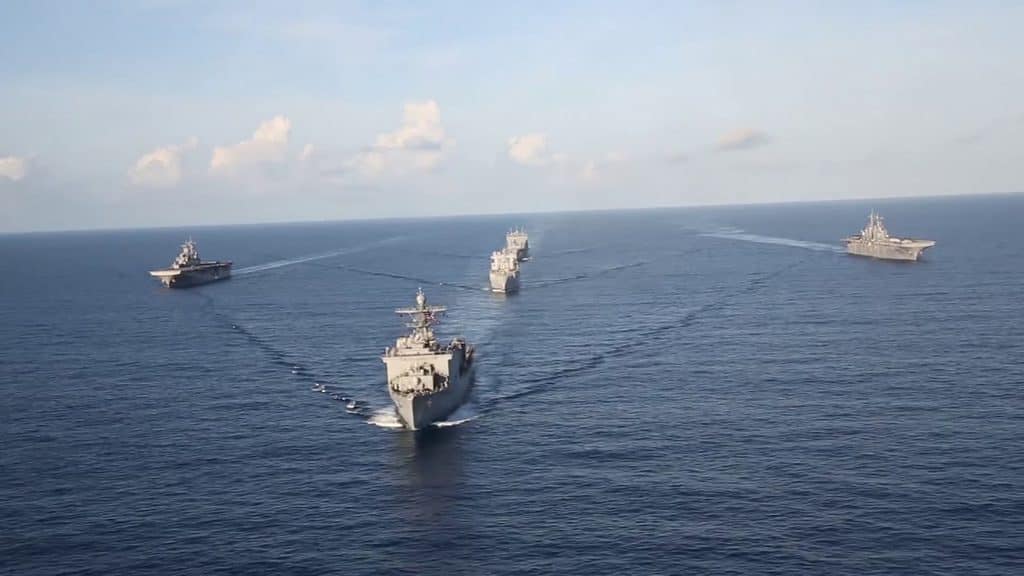
The naval story is real and well documented. It began in September 2025 with strikes on alleged drug boats. It culminated in strikes on Venezuelan targets and the capture of Nicolás Maduro in a predawn raid on 3 January 2026. At its peak, there were as many as 11 warships and 10,000 troops in the region, and nearly 20% of the Navy’s deployed warships were concentrated there.
The campaign has not stopped. The boat-strike toll passed 227 dead across at least 68 strikes by early September. The focus has also widened. In May, the carrier USS Nimitz entered the Caribbean as relations with Cuba worsened. Reports say Washington has imposed more than 240 sanctions measures on Cuba since January and intercepted at least seven oil tankers heading there. Messaging has been mixed: one outlet reported that Politico said the administration was increasingly considering strikes on Cuba, while Trump said no escalation was needed.
Further south the footprint is political as well as naval. Ecuador has confirmed that U.S. Green Berets operate on its soil, with warships arriving and a return of the Manta base under discussion. Colombia has pledged to align fully, with $1 billion in U.S. security assistance and an offer to host the headquarters of the U.S.-led Shield of the Americas.
Where Brazil fits, and where it doesn’t
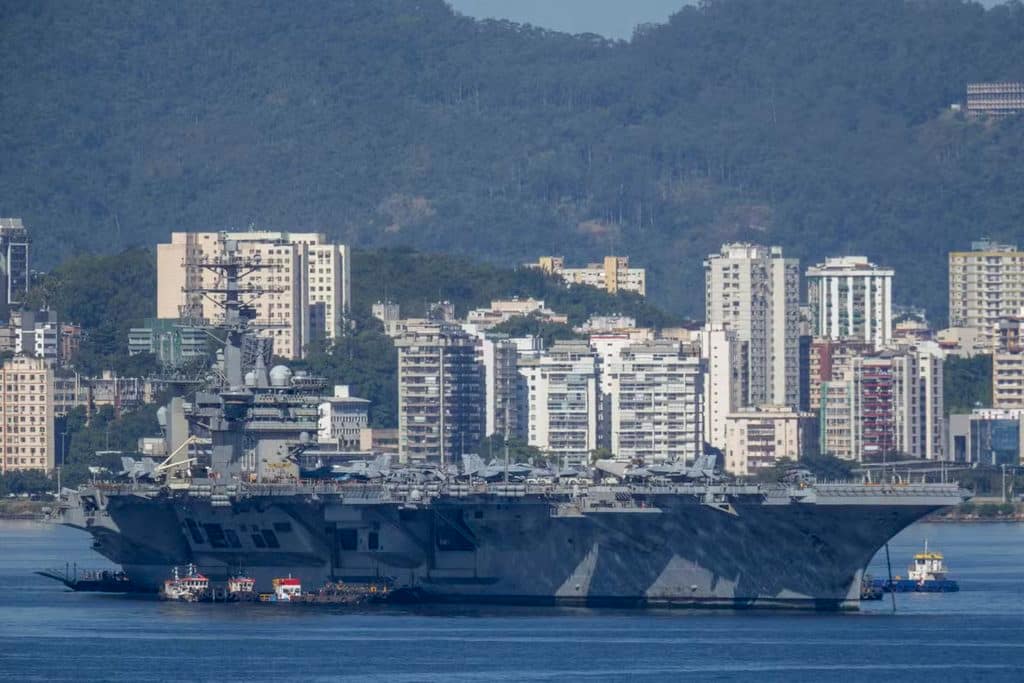
Brazil sits outside this military architecture. One defense newsletter describes it as hosting nothing, joining nothing and selling everything it can. The Nimitz even conducted joint exercises with the Brazilian Navy near Rio de Janeiro before entering the Caribbean, as part of a routine partnership program.
The friction is diplomatic and legal. In late May the Trump administration announced it would designate Brazil’s two largest criminal organizations, the PCC and Comando Vermelho, as Foreign Terrorist Organizations, effective June 5. The Lula government rejected the move as politically motivated. In July, Brazil denied visas to two State Department officials who wanted to discuss election integrity.
So what is Washington preparing for?
Nobody outside the administration can say with confidence. Here are the readings that fit the public evidence, and what counts against each.
1. A genuine security threat to U.S. facilities. The simplest reading is the one officially given. Counting in its favor: Brazilian police acted on a tip from foreign intelligence and seized communications equipment. Against it: no corroborating evidence has surfaced, and the timing invites suspicion.
2. Political pressure around a knife-edge vote. This is the reading of Lula’s camp. Polls show a statistical dead heat between Lula and Flávio Bolsonaro, with a runoff set for October 25 if nobody clears 50%. In its favor: tariffs, the visa dispute and the terrorism designations all point toward a rocky relationship. Against it: no public evidence ties the closures to an intent to influence the outcome, and the State Department rejects the accusation.
3. Cuba. The most visible naval build-up points at Havana, not Brasília. Pressure there is escalating and several signals suggest planning for contingencies. Nothing links it to Brazil.
4. A hemisphere organized around Washington. The pattern across Colombia, Ecuador and Peru is a security bloc taking shape. Brazil is the largest country that hasn’t joined, which makes friction with it more likely than cooperation.
There is also a limit on the first three. The strain on U.S. forces is documented. Commanders, including the head of Southern Command, have formally objected that the six-month Iran war is draining ships and aircraft from their regions. A large new operation would compete with the Middle East for the same hulls, a constraint any planner must weigh.
What to watch
The signals to follow are concrete. First, whether consular services reopen quickly after the vote, which would suggest a short-term precaution. Second, whether Brazilian investigators ever identify the supposed threat. Third, how Washington reacts to the result, especially if a runoff is needed or the margin is thin. Fourth, whether the Caribbean force grows or shrinks as the Iran war’s demands change.
Today, 158 million Brazilians are voting. The honest conclusion is that the naval build-up and the embassy closures are best read as two storylines running in parallel: one about drug cartels, Cuba and a hemisphere realigning around the United States, the other about a bilateral relationship that has deteriorated month by month. Whether they are connected is not something the public record can settle. This article reflects information available up to October 3, and events on election day may change the picture.