Picture a long, S-shaped country where emerald rice terraces, limestone seascapes, and ancient imperial cities sit just a short flight or train ride apart. Here’s a route from north to south.
Ha Long Bay and Lan Ha Bay
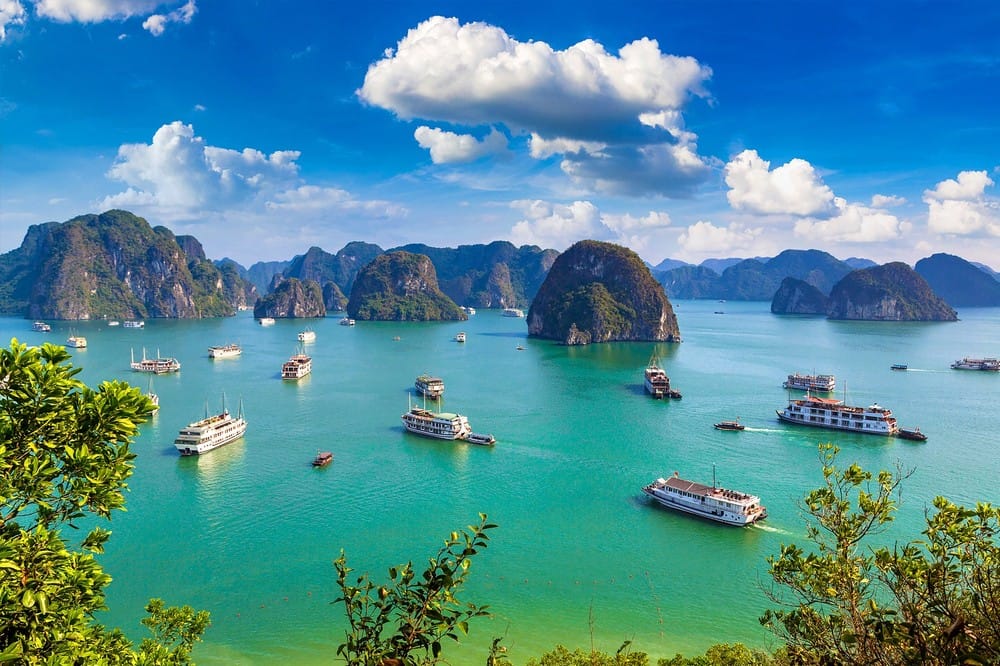
Your journey begins in the northeast, where nearly 2,000 limestone karsts and islets rise from jade-green water. An overnight cruise is the classic way to see it: you drift past sea caves and floating fishing villages, kayak through quiet lagoons, and watch the cliffs turn gold at sunset. For fewer crowds, choose Lan Ha Bay, which has the same scenery with a more peaceful feel.
Sapa and the Northern Highlands
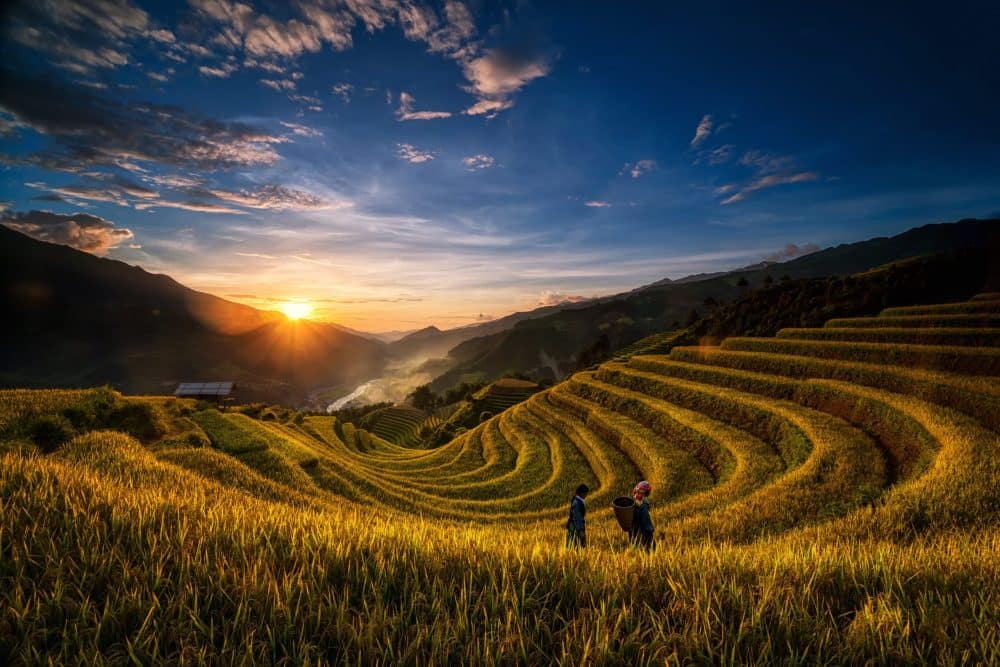
Head inland to the mountains near the Chinese border, where terraced rice fields carve the slopes into green staircases (golden around September and October). Trekking between villages of the Hmong and Dao peoples, you’ll pass bamboo forests and misty valleys, and can sleep in a family homestay. On clear days, the views stretch toward Fansipan, often called the “Roof of Indochina.”
Hanoi’s Old Quarter
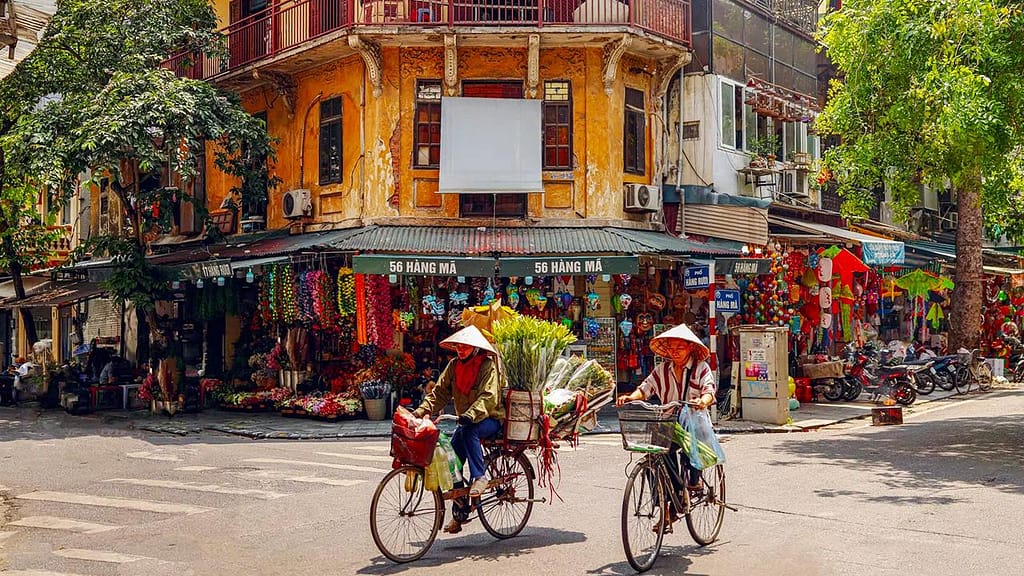
The capital is a thousand-year-old city of lakes, French colonial boulevards, and tangled lanes still organized by the trades they once served. Visit the Temple of Literature, founded in 1070 as Vietnam’s first national university, then sit on a tiny plastic stool with a bowl of phở or a cup of egg coffee while motorbikes stream past.
Hue: The Imperial City
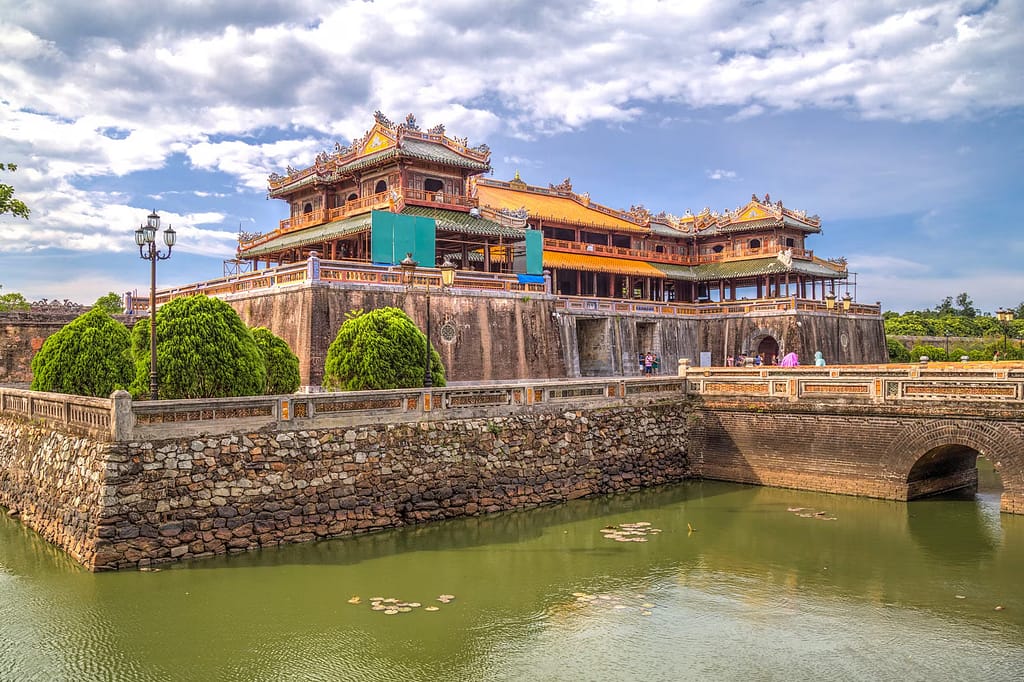
Along the Perfume River lies the old capital of the Nguyễn dynasty, Vietnam’s last ruling family. Inside the walls of the Citadel are the ornate Forbidden Purple City, ceremonial gates, and quiet courtyards, many of them scarred by the Tet Offensive and carefully restored since. Just outside, the royal tombs of emperors like Khải Định and Tự Đức blend architecture with pine forests and lotus ponds.
Hoi An Ancient Town
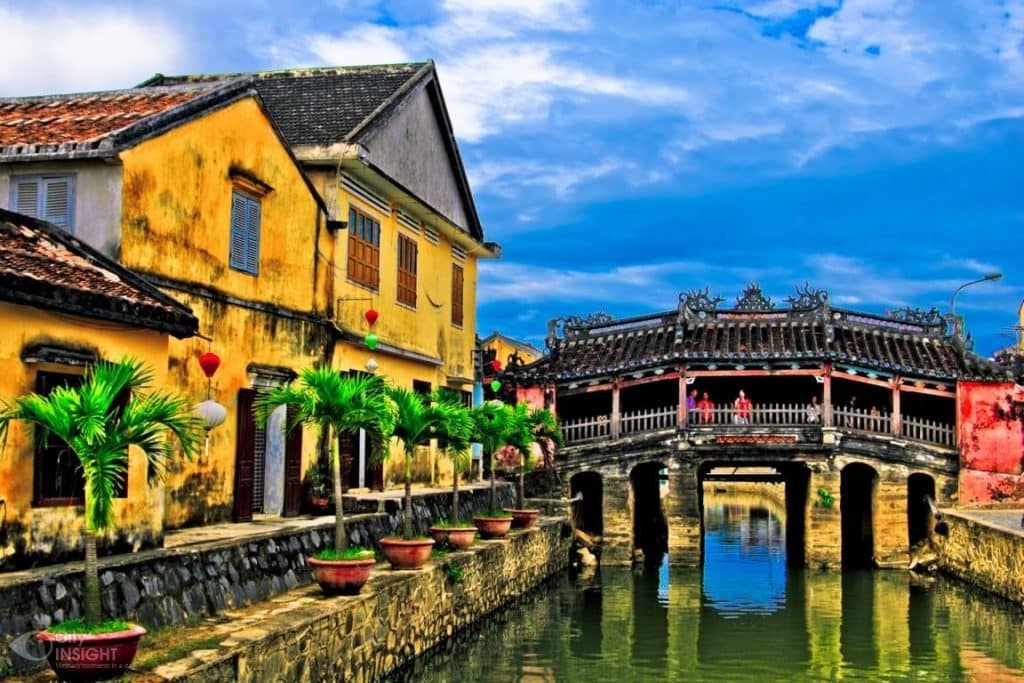
Further south on the central coast, this UNESCO-listed trading port feels like a living museum. Japanese covered bridges, Chinese assembly halls, and mustard-yellow merchant houses line the riverfront, and at night thousands of silk lanterns glow over the water. It’s also known for its tailors, who can make a custom outfit in a day or two, and for cooking classes built around dishes like cao lầu.
Mekong Delta
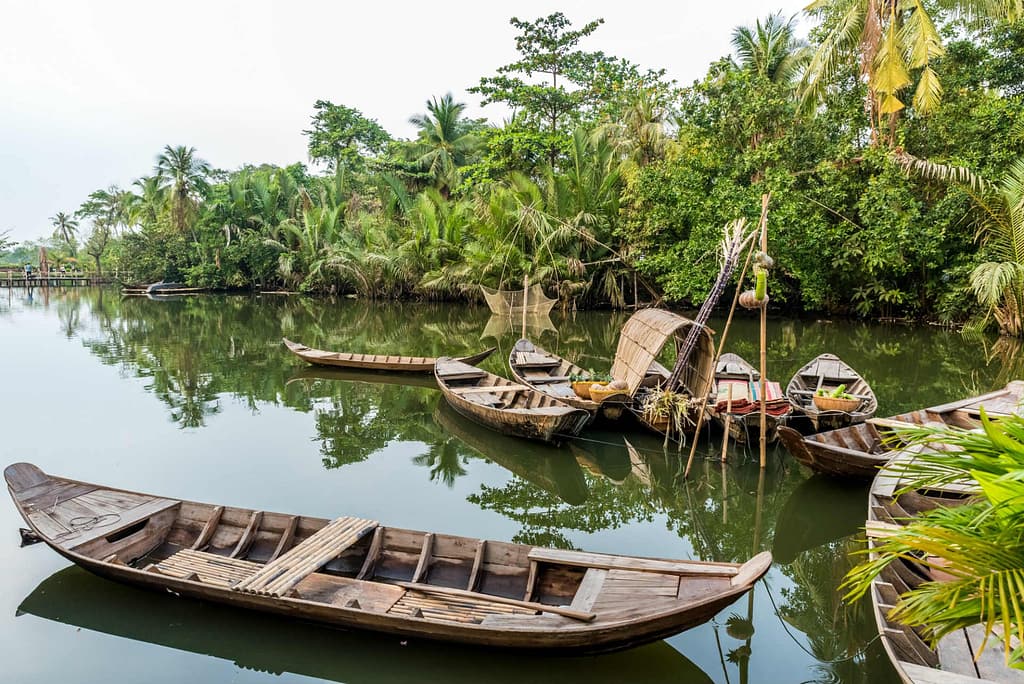
Finish in the south, where the river fans into a maze of canals, orchards, and floating markets. Early in the morning at Cái Răng, boats pile high with pineapples, watermelons, and sweet potatoes trade goods in a scene that has barely changed in generations. Glide along the narrow waterways under coconut palms, and the pace of the whole trip slows to match the current.
A Final Thought
Few countries carry as heavy a past as Vietnam. It endured a thousand years of Chinese rule, a century of French colonialism, and then decades of devastating war, with the American conflict alone leaving millions dead, cities bombed, and landscapes poisoned by Agent Orange and scattered with unexploded ordnance. Yet the Vietnam you see today is remarkable for how it has carried that history. Hue’s citadel has been rebuilt stone by stone, former battlefields are now farmland and tourist trails, and a young, ambitious population has turned the nation into one of Asia’s most dynamic economies since the Đổi Mới reforms of 1986.
What stays with many travelers isn’t bitterness but warmth. The people who lived through the hardest chapters often greet visitors with open curiosity and a readiness to look forward. Vietnam doesn’t hide its scars, but it doesn’t let them define the horizon either. Its rise is less a story of forgetting than of resilience: a country that remembered everything and chose to keep building anyway.