What Paraguay’s Voting Machines Could Teach Brazil
eyesonbrasil
Brazil’s electronic voting machines have a good technical record and a trust problem. A Quaest poll in February found 53% of Brazilians say the machines are trustworthy, which leaves almost half with doubts. Just across the border, Paraguay votes on a hybrid system that adds a piece of paper to the electronic process. It is worth understanding, for what it does and for what it doesn’t.
How Paraguay votes
Paraguay’s law requires electronic voting with a printed backup. The process on election day goes like this:
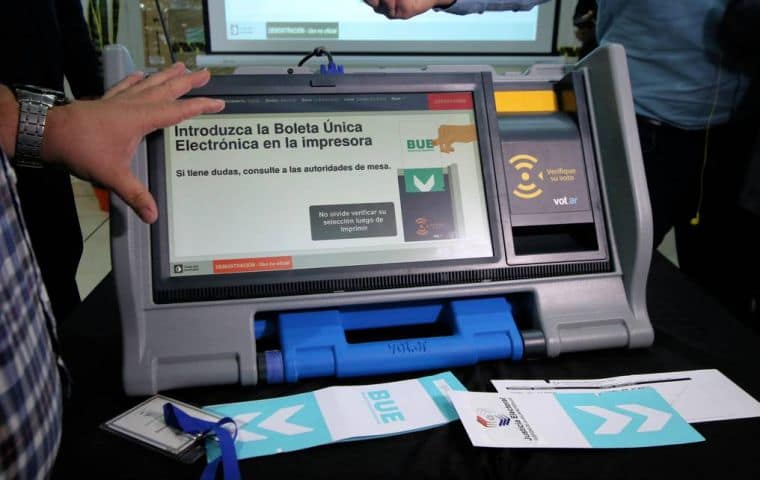
The ballot. After checking the voter’s ID against the register, the table staff hand over a ballot signed by two poll workers, with an RFID chip embedded in it.
The booth. The voter inserts the ballot into the machine, picks candidates on the screen and can vote blank or change the selection before printing.
The printout. The machine prints the choices on the ballot and records them on the chip. The voter can hold the chip to the machine’s reader to confirm that the digital content matches the printed text.
The box. The voter folds the ballot, hands it to the table president for a signature, inks a finger and drops the ballot into the plastic ballot box.
The electoral authority says the machine works as a printer and stores no voter information. It also says a broken machine can be replaced at once without losing data, since the record lives on the printed ballot.
At closing, the ballots are counted at the table. They pass through a machine that reads the chips, which speeds up results, and the table can print its tally. Party observers watch the count. The preliminary results system, TREP, then transmits the table certificates, and the EU’s 2023 observer mission reported that it enjoys great trust.
How it is supposed to build trust
Supporters of this model make several arguments.
The voter becomes the first auditor. Officials describe voters as the first auditors of their own vote, because they can compare screen, paper and chip.
The paper is physical evidence. If anyone challenges the electronic count, the ballots can be recounted by hand.
The count is public. One Paraguayan lawmaker defending the system says the count is visible to the public to the last minute.
The loser has something to inspect. A recount of real ballots can give a defeated side a way to accept the result.
Brazil’s own history with printed votes
Brazil has debated this before, and the debate left scars. The proposal known as PEC 135/19 would have required a printed vote record. In August 2021 the Chamber of Deputies fell short of the 308 votes needed, after a committee had rejected it 23 to 11. Earlier, the Supreme Court had struck down a previous law on printing, citing risks to the secrecy of the vote and to efficient use of public money.
The politics were bitter. President Bolsonaro made printed voting a flagship demand while attacking the electoral court, and critics saw the campaign as a pretext to undermine confidence. Supporters, such as the PEC’s author, insisted that it was about transparency for Brazilians. Both sides agreed the debate was about more than technology.
The case for Brazil adapting a Paraguayan-style model
The best argument is about confidence, not about proof of fraud. Brazil’s current checks, such as the printed result slip, parallel voting and open source code, test whether the machine and its totals are correct. They do not give each voter anything physical to verify. Advocates say that a verified paper record would address the doubts of the near-half of Brazilians who don’t trust the machines, whether or not those doubts are justified. A paper layer also allows recounts and sampling audits. For a country where trust in the system is itself politically contested, a visible safeguard could matter as much as an invisible one.
The counterarguments
The case has real weaknesses, and Paraguay is a cautionary example.
Paper has not ended Paraguay’s disputes. After the 2023 election, opposition candidates alleged fraud and there were large protest marches. A candidate also alleged that poll workers handed pre-printed, signed ballots to certain voters.
Many Paraguayan voters don’t use the verification. A survey found high percentages of voters who did not check their ballots with the chip, and some believed votes were stored in the machines.
Vendor trust matters. The machines are rented from a consortium whose representatives are former business partners of President Peña, and critics earlier complained the vendor would not allow external audits by parties. The ruling side replies that no serious, proven fraud complaint has emerged in 30 years.
Brazil’s electoral court argues the existing safeguards suffice, and printing adds cost, logistics and new failure points such as printer jams. The Supreme Court’s earlier concern about vote secrecy also remains part of the debate.
What Paraguay actually teaches
Paraguay shows that paper can give voters a way to participate in verification, and that it can speed up counting. It also shows that paper alone does not create trust. Trust depends on who runs the system, whether independent audits are allowed, and whether voters actually use the checks. If Brazil ever revisits the idea, the Paraguayan experience suggests that the details of governance and audit access would matter as much as the printer.
This reflects reporting available up to October 4, the day of Paraguay’s municipal elections, which use this same system.