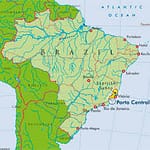



Two Brazils, One Algorithm

What AI in Education Looks Like from São Paulo to the Amazon
eyesonbrasil
Amsterdam, September 13, 2026 – If Celeste Labuschagne’s central warning about South Africa is that good intentions without infrastructure and guidance produce stalled initiatives, Brazil offers something rarer: a live experiment in what happens when a country tries to do both at once — build the policy and the infrastructure simultaneously, at a continental scale, across some of the widest social and geographic gaps on Earth. The results, so far, are a study in contrast. In São Paulo and Porto Alegre, universities are drafting ethics protocols for generative AI. In parts of the Amazon, some schools still don’t have reliable electricity, let alone a working internet connection. Brazil isn’t failing to plan for AI in education — it’s discovering that a single national plan can succeed and fail simultaneously, depending entirely on which Brazil you’re standing in.

A National Plan With Real Teeth
Unlike South Africa’s stalled coding-and-robotics precedent that Labuschagne warns against repeating, Brazil has, on paper, done the thing she says matters most: it built the strategy before the enthusiasm outran it — or at least, it tried to. In July 2024, Brazil’s Ministry of Science, Technology and Innovation launched the Brazilian Artificial Intelligence Plan (PBIA) 2024–2028, titled “AI for the Good of All,” a comprehensive strategy built around five strategic axes, including AI infrastructure, capacity building, and the use of AI to improve public services such as education. The plan carries a budget of roughly R$23 billion and sets ambitious goals through 2028, including training more than five million workers in AI-related skills, integrating AI literacy into primary and secondary education, and expanding graduate AI and data-science programs.
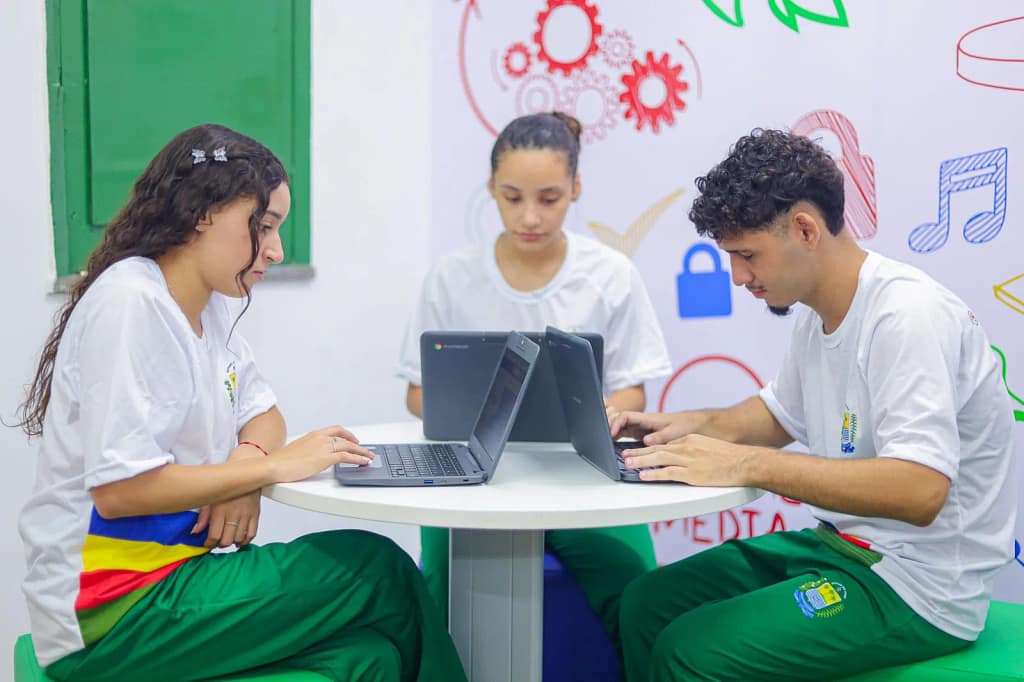
This isn’t just aspirational language sitting in a government PDF. In 2026, Brazil published its first national AI-in-education framework, arriving at a moment when supporting infrastructure was genuinely catching up — over the previous two years, the Escolas Conectadas program had expanded high-speed Wi-Fi for pedagogical use in public schools from 45% to 71.1%, reaching nearly 100,000 schools and 24 million basic-education students. The framework itself emerged from real public consultation — 57 submissions from civil society organizations and in-person workshops in Brasília — and includes ethical principles and technology-adoption criteria aligned with Brazil’s data-protection law and its Digital Child Statute. In March 2026, the Ministry of Education followed with a practical guide on AI in basic education, aimed at giving schools routines for teaching students to question AI outputs, protect personal information, recognize errors, and keep doing the thinking themselves — rather than simply issuing a yes-or-no ruling on whether a tool is allowed.
This is, almost precisely, what Labuschagne argues South Africa hasn’t done: build clarity and routines before mandating adoption, rather than after.
Piauí: The Unlikely Frontrunner
One of the most striking counterexamples to the “wealthy states move fastest” assumption comes from Piauí, one of Brazil’s poorer northeastern states. Since 2024, Piauí has incorporated a mandatory weekly AI subject into the curriculum of public full-time high schools, with phased expansion by grade level through 2026, backed by an open-licensed AI-literacy curriculum, a 300-plus-page textbook, and 17 hours of video lessons. The initiative combines an online distance-training program for teachers — with synchronous sessions, tutoring, and sustained support — and has certified more than 650 unique teachers over its first two years, now reaching approximately 120,000 students across 494 full-time schools.
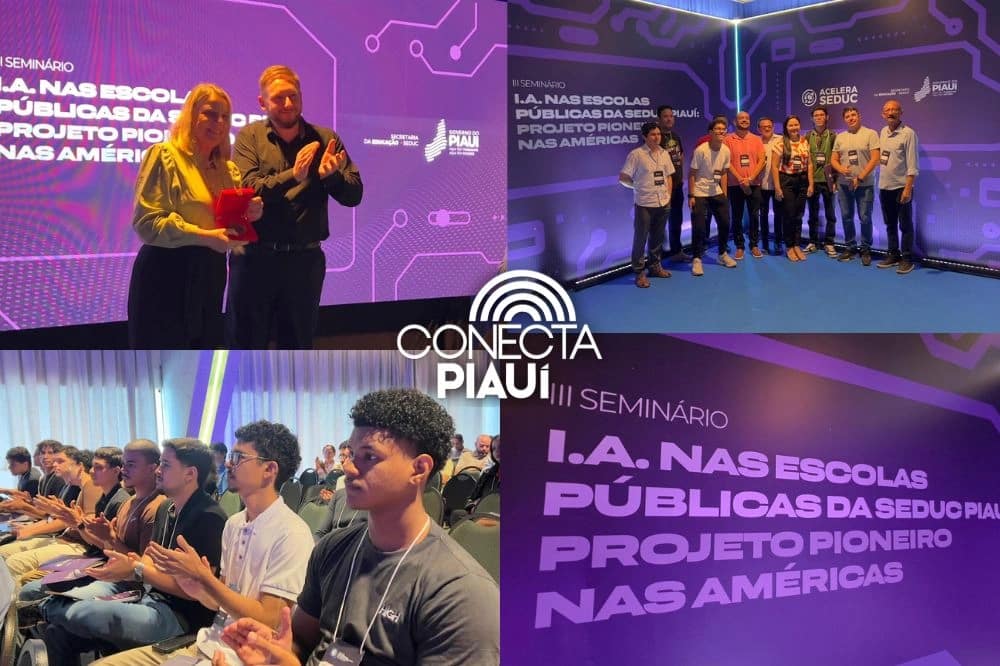
Piauí matters precisely because it complicates the easy narrative. Prosperity alone doesn’t determine readiness — political will and a coherent implementation plan do. It’s a point Labuschagne would likely recognize: teacher training and structured curriculum, not just budget, is what turns a policy announcement into a functioning classroom practice.
São Paulo: Innovation, Friction, and Public Backlash
São Paulo, Brazil’s wealthiest and most populous state, tells a messier story — one that illustrates exactly the risk Labuschagne flags about moving fast without buy-in from the people who have to implement the change. In 2024, Governor Tarcísio de Freitas announced plans to use ChatGPT to generate classroom content for public schools — a proposal that triggered protests on social media and among teachers who feared both job losses and a decline in education quality.
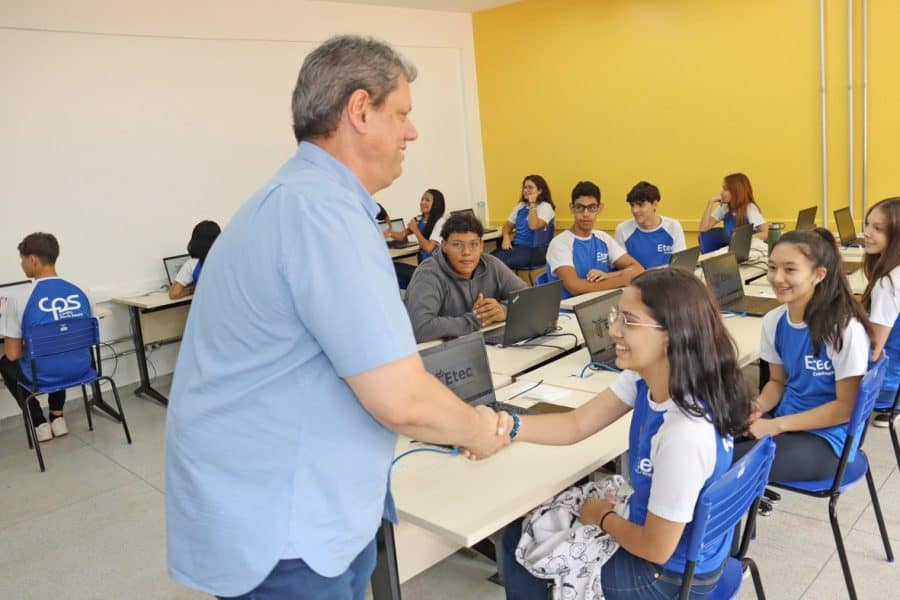
Two years on, the state’s flagship universities have taken a more deliberate route. São Paulo’s three major public universities — USP, Unicamp, and Unesp — have been structuring initiatives to guide the use of artificial intelligence on campus, building guidelines, reference centers, and guides meant to set ethical and pedagogical parameters for AI use in teaching, research, and administration. At Unicamp specifically, debate over the issue is already mobilizing different parts of the institution, coordinated in part through a newly created Center of Reference in Artificial Intelligence Technologies.
The contrast within a single state is instructive: a top-down political announcement provoked resistance, while university-driven, faculty-involved policymaking is proceeding with far less friction. It’s a small-scale echo of Labuschagne’s larger point — technology adopted without the people who’ll actually use it on board tends to stall or backfire, no matter how well-resourced the institution behind it is.
Rio Grande do Sul: Reflection Over Rush
Farther south, in Rio Grande do Sul, the tone is more contemplative than triumphant. A recent edition of the UFRGS university newspaper carried a piece from the Rectory’s office titled, in essence, “Generative artificial intelligence needs a necessary listening” — a framing that leans toward caution and institutional reflection rather than rapid rollout. This is consistent with what’s visible across Brazil’s southern federal universities more broadly: institutions with strong existing research and international-partnership infrastructure are treating AI governance as a matter requiring internal deliberation, not just technical deployment.

The Amazon: A Different Country Entirely
Then there’s the Amazon — and here the story stops being about pedagogy and starts being about basic access. Between 50% and 75% of schools across the Amazon region lack computers or tablets for students at all, and in indigenous areas of Brazil and Peru specifically, that figure can rise as high as 90%. School connectivity across the Amazon lags behind the rest of Brazil, and in the state of Amazonas, only 9.4% of Indigenous teachers hold permanent contracts, compared with 85.3% of teachers in non-Indigenous schools.
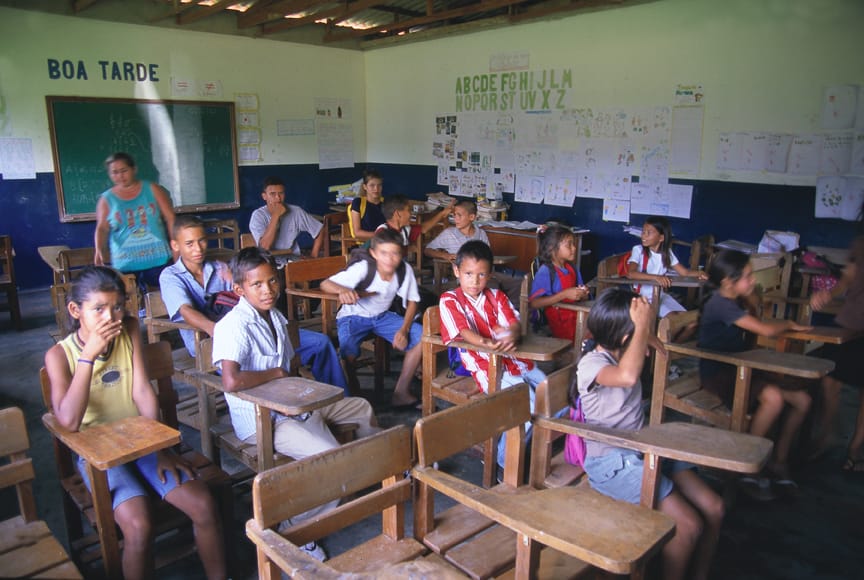
The scale of the population affected is not small. Around 385 Indigenous groups live across roughly 2.4 million square kilometers of the Amazon, and about 42% of children and adolescents aged six to sixteen struggle to fully participate in remote learning because of limited electricity, internet connectivity, and technological infrastructure — a gap that drives high dropout rates and deepens existing educational disparities. Children in the Amazon region also face longer distances to school, with 29% of the population aged 10 to 19 living more than five kilometers from the nearest secondary school, alongside worse infrastructure and less qualified teachers than in other parts of the country.
For these communities, talk of “AI literacy” or “prompting skills” is, for now, a distant conversation — the more urgent one is electricity and a stable signal. Yet the region isn’t being ignored entirely. Programs such as GESAC (Governo Eletrônico – Serviço de Atendimento ao Cidadão) have worked to deliver internet access to remote areas, indigenous communities, and rural schools, while efforts like Internet Para Todos use satellite connectivity to reach underserved municipalities. More experimental approaches are also emerging: researchers have proposed delay-tolerant, peer-to-peer network solutions specifically designed to bring educational resources to remote Amazonian communities such as those near Leticia, where conventional connectivity models don’t work.
There is cause for optimism buried in the data too. When culturally adapted, specific learning programs are developed for indigenous students, researchers have documented up to a 50% increase in performance — a finding that should reframe how AI literacy is eventually introduced in these communities: not as a copy-paste of the urban curriculum, but as something built around local language, culture, and need from the outset.
There’s also a more unsettling layer to the connectivity conversation that goes beyond access. Researchers studying Indigenous communities in the Amazon warn of what they call “Indigenous digital colonisation” — the risk that technological inclusion, if poorly mediated, produces new vulnerabilities rather than genuine improvements in wellbeing, and argue that how access is shaped and supported will matter as much as the connection itself. That’s a caution Labuschagne’s framework doesn’t explicitly address in the South African context, but it fits naturally alongside her core argument: technology without intention, guidance, and cultural grounding produces little value — and can, in the Amazon’s case, actively cause harm.
One Country, Several Speeds
Put side by side, Brazil’s AI-in-education story doesn’t reduce neatly to “rich states good, poor regions bad.” Piauí — hardly Brazil’s wealthiest state — has built one of the country’s most structured AI curricula. São Paulo’s government stumbled into public backlash while its universities are proceeding more carefully. Rio Grande do Sul is choosing deliberation over speed. And across the Amazon, the conversation isn’t really about AI at all yet — it’s about the electricity, devices, and teacher stability that have to exist before any AI policy means anything on the ground.
Labuschagne’s central thesis — that AI cannot be policed, so learners must instead be taught to use it critically and honestly — implicitly assumes a baseline of access and teacher confidence that much of Brazil, particularly its Amazonian and Indigenous communities, does not yet have. That doesn’t make her framework wrong; if anything, it makes the case more urgent. A national AI-literacy plan that only reaches the schools already equipped to receive it will simply widen a gap that already exists. Brazil’s real test isn’t whether São Paulo or Piauí can build a good AI curriculum — clearly, in different ways, they can. It’s whether the country can extend the same clarity, consistency, and cultural sensitivity to the regions where the digital divide isn’t a metaphor, but a description of daily life.