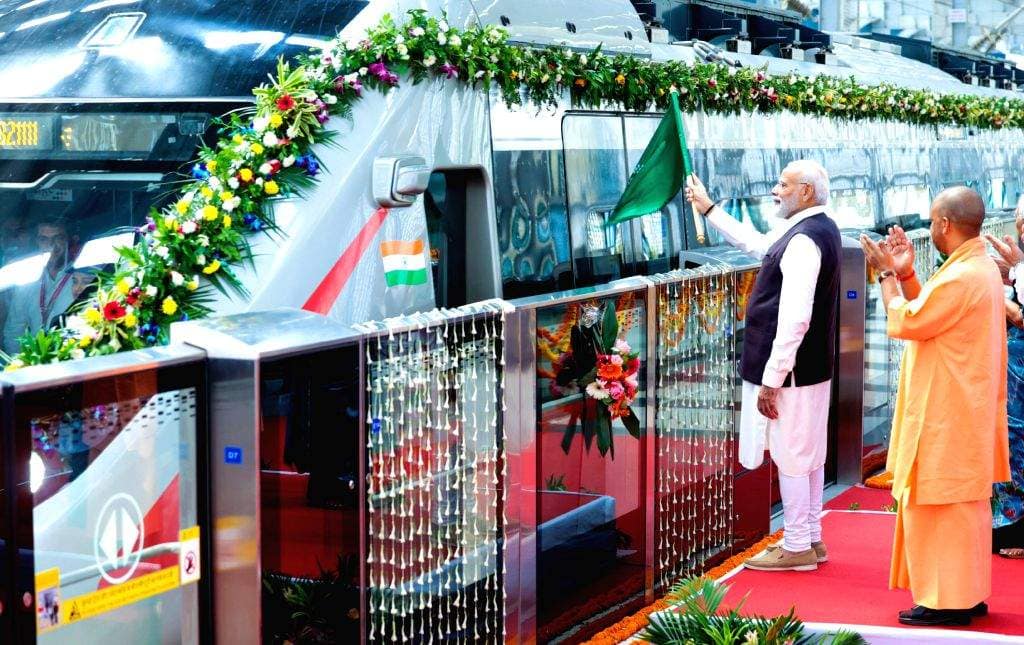
Amsterdam, July 21, 2026 – On July 17, 2026, Prime Minister Narendra Modi stood at Jind railway station in Haryana and flagged off a train unlike any that had ever moved on Indian rails. Its name: NaMo Green Rail. Its fuel: hydrogen, stored in onboard cylinders, converted into electricity through fuel cells, with nothing coming out of its exhaust but water vapor and heat.
Prime Minister Narendra Modi at the inauguration
The train runs the 89-kilometer Jind–Sonipat corridor on Northern Railway — a stretch of track that, like much of rural India, was never electrified and would otherwise still be running on diesel. Instead, it now carries roughly 2,600 passengers across ten air-conditioned coaches, making it, by capacity, the largest hydrogen train operating anywhere on Earth. That single fact places India ahead of the pioneers of this technology — Germany, France, and Japan all deployed hydrogen trains first, but at a fraction of this scale.
How It Actually Works
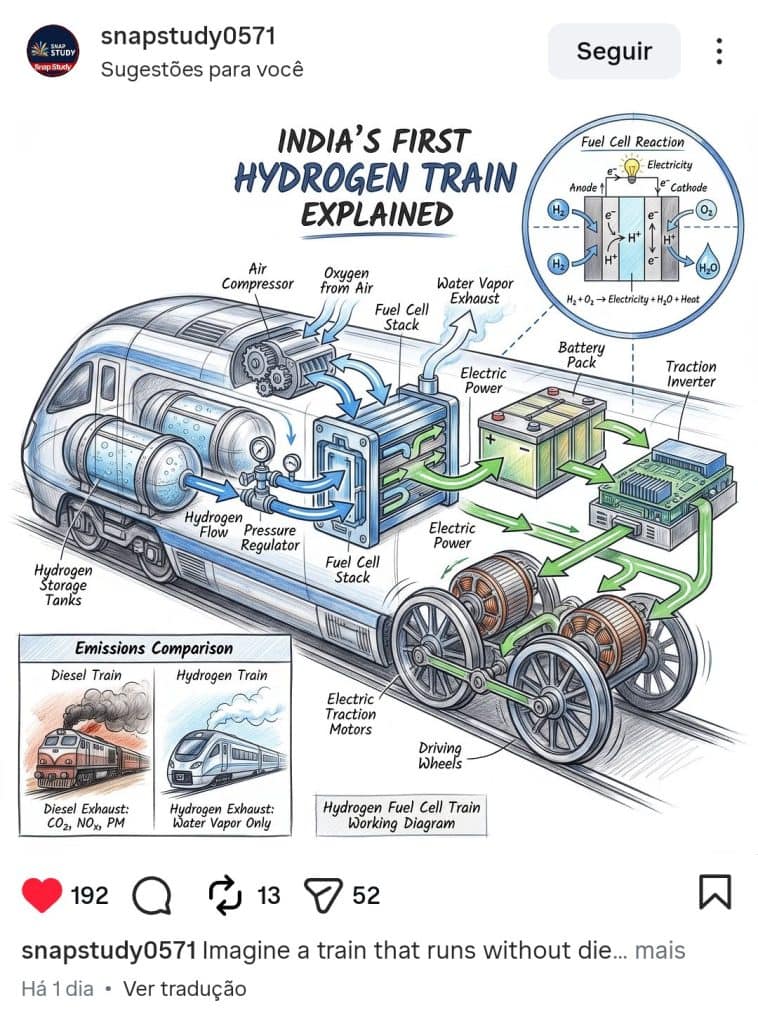
Hydrogen is stored under pressure in onboard tanks, then fed through a pressure regulator into a fuel cell stack, where it reacts with oxygen drawn from the air. That reaction produces electricity, heat, and water vapor — nothing else. The electricity charges a battery pack and drives a traction inverter, which powers the electric motors turning the wheels. It’s the same basic chemistry as a hydrogen fuel cell car, scaled up to move ten train cars.
What makes NaMo Green Rail more than an demo is what’s behind it: a dedicated hydrogen production plant built at Jind, generating hydrogen through electrolysis — splitting water into hydrogen and oxygen using electricity — as part of India’s National Green Hydrogen Mission. That plant, with a storage capacity of 3,000 kilograms, exists specifically to keep this train fueled.
And this is only the beginning. Indian Railways has budgeted roughly ₹2,800 crore (about $335 million) to roll out 35 hydrogen trains nationwide, including a program called “Hydrogen for Heritage” aimed at converting iconic routes — the Kalka–Shimla railway among them — to zero-emission running. If the Jind–Sonipat pilot succeeds, some of India’s most scenic and storied rail journeys may soon travel in near-silence, trailing nothing behind them but a faint plume of steam.
Crossing Over to Brazil: A Different Kind of Hydrogen Story
Half a world away, Brazil is chasing the same dream — but at sea, and with a fascinating twist.
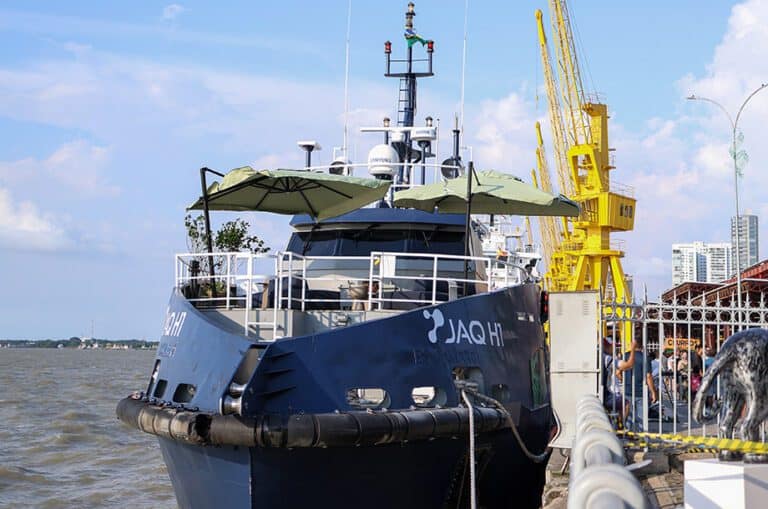
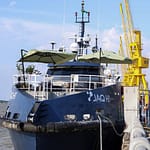
Where India’s train stores hydrogen produced on land, a Brazilian project called JAQ H2 is trying to make hydrogen while underway. Developed by Grupo Náutica in partnership with Brazil’s Institute of Technological Research (IPT), this roughly 50-meter vessel carries an electrolyzer on board, splitting seawater-derived water into hydrogen and oxygen using onboard-generated electricity, and using that hydrogen to help power the ship as it sails. It’s an audacious bet on energy autonomy — a boat that, in effect, refuels itself as it moves.
Brazil isn’t stopping there. At COP30 in Belém in late 2025, a hydrogen-powered research vessel called the Explorer H1 — built through a partnership between Chinese hydrogen firm FTXT, Great Wall Motor’s hydrogen division, and Brazilian partners including JAQ and Itaipu — was unveiled as the country’s first hydrogen research ship, with everything from its lights to its kitchen running on hydrogen power. Its future mission: carrying scientists deep into the Amazon to monitor the rainforest, all on zero-emission energy.
Two Countries, One Element, Two Philosophies
Put side by side, these projects tell a story about how nations choose to adopt the same technology differently.
India’s approach is centralized and industrial: build a hydrogen plant, fuel a train at scale, and use it to electrify routes the grid never reached — with an explicit roadmap to expand to 35 trainsets. It’s hydrogen as national infrastructure policy.
Brazil’s approach is decentralized and experimental: put the hydrogen production inside the vehicle itself, testing whether a ship — or eventually other vessels — can achieve genuine energy independence, untethered from fixed refueling infrastructure. It’s hydrogen as frontier engineering, fittingly suited to a country whose most important expanses — the Amazon, the coastline — are remote and hard to service.
Neither approach is “ahead” of the other; they’re solving different problems. India needs to move millions of commuters across a vast, unevenly electrified rail network. Brazil needs to reach and study places where infrastructure barely exists at all. But both point to the same underlying shift: the quiet realization, in two very different countries, that the cleanest fuel might be the simplest one — hydrogen and oxygen, recombining to make electricity, water, and nothing to apologize for.
Sources: ABC News, Dailyhunt, Fuel Cells Works, Deccan Herald, Travel and Tour World, Gasgoo, and Wikipedia (National Hydrogen Ship, List of ship launches in 2026), July 2026.