


China’s Flying Cars Are Leaving the Runway — And the Factory Floor

eyesonbrasil
Amsterdam, July 22, 2026 – For decades, the flying car was science fiction’s favorite broken promise. In 2026, China is trying to make good on it — not with a single prototype, but with actual assembly lines. Backed by a national policy push around what Beijing calls the “low-altitude economy,” a handful of Chinese companies have moved from concept videos to trial production, certification paperwork, and — in one case — a factory built specifically to build them.
Here’s a look at the leading models, what makes each one different, what they cost, and how they stack up against a very different approach being taken in Brazil.
XPeng AeroHT’s “Land Aircraft Carrier”
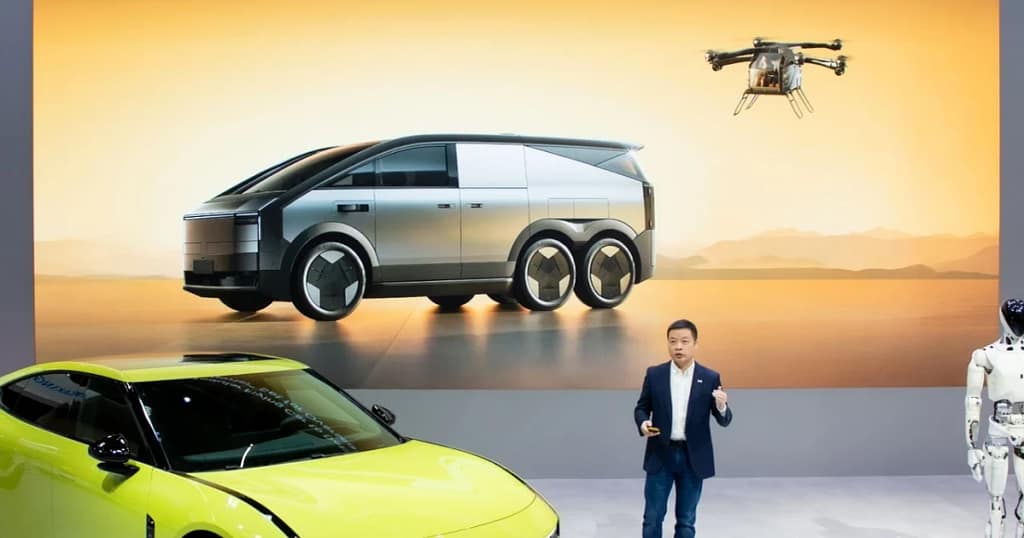
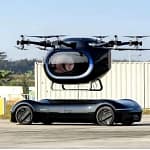
The most talked-about entrant isn’t really one vehicle — it’s two. XPeng’s flying car subsidiary, AeroHT, has built a modular system: a six-wheeled electric ground vehicle that acts as a mothership, carrying a detachable two-seat eVTOL “flying module” folded into its trunk. Drive to a takeoff site, unfold the aircraft in about five minutes, and take off — the ground vehicle stays behind while the air module handles the actual flight, currently good for a short hop of around 30 km.
It’s an unusual design choice, but a deliberate one: rather than trying to certify a single vehicle that both drives on highways and flies through controlled airspace, AeroHT splits the problem in two, so each half only has to be very good at one job.
The company began trial production at a dedicated plant in Guangzhou in late 2025, with a planned annual capacity of 10,000 units, and is targeting mass production and first deliveries sometime in 2026. Pricing hasn’t been finalized, but the company has repeatedly said it will land under 2 million yuan — roughly $280,000. Early customers are expected to be tourism operators, search-and-rescue services, and wealthy early adopters rather than everyday commuters.
EHang’s EH216-S
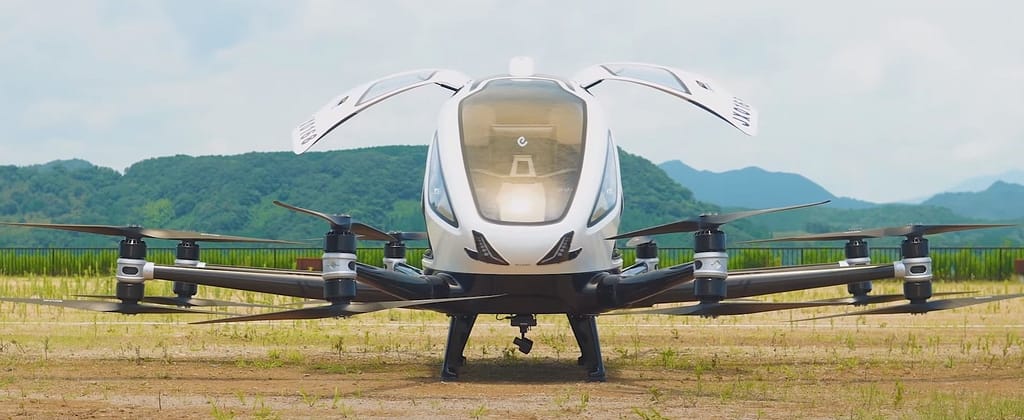
If AeroHT is still finishing its paperwork, EHang is already flying paying passengers. Its EH216-S is a two-seat, sixteen-rotor autonomous aircraft — no pilot, no in-cabin controls. Passengers sit down, the doors close, and a ground control center manages the flight remotely over a 5G link, typically a short sightseeing loop that returns to the same launch pad.
The EH216-S became the first aircraft of its kind to win a full Chinese type certificate, back in 2023, and has since added a production certificate and the operating licenses needed to actually sell tickets — a regulatory sequence no other passenger-drone maker in the world has completed yet. In early 2026, EHang and its operating partners began running short public sightseeing flights in Guangzhou and Hefei, priced at a very approachable 299 yuan (about $41) per ride.
Buying one outright is a different story: EHang’s suggested retail price is roughly 2.39 million yuan (about $330,000) inside China, and closer to $410,000 for export markets — putting it firmly in “institutional buyer” territory rather than personal transportation.
The affordability picture
It’s worth being precise about what “affordable” means here. None of these vehicles are affordable in the way an electric scooter or even a luxury car is. They cluster in the $280,000–$410,000 range — closer to a small private plane than a consumer vehicle. What has genuinely changed is the trajectory: China has gone from concept unveilings to physical factories with five-figure annual capacity targets, certified aircraft carrying ticketed passengers for under $50 a ride, and government-backed “air corridors” and low-altitude traffic infrastructure being built out in parallel. That combination — real certification, real factories, real (if pricey) sales — is what separates 2026’s Chinese entrants from the flying car demos of the past fifteen years.
A different road: Embraer’s Eve in Brazil
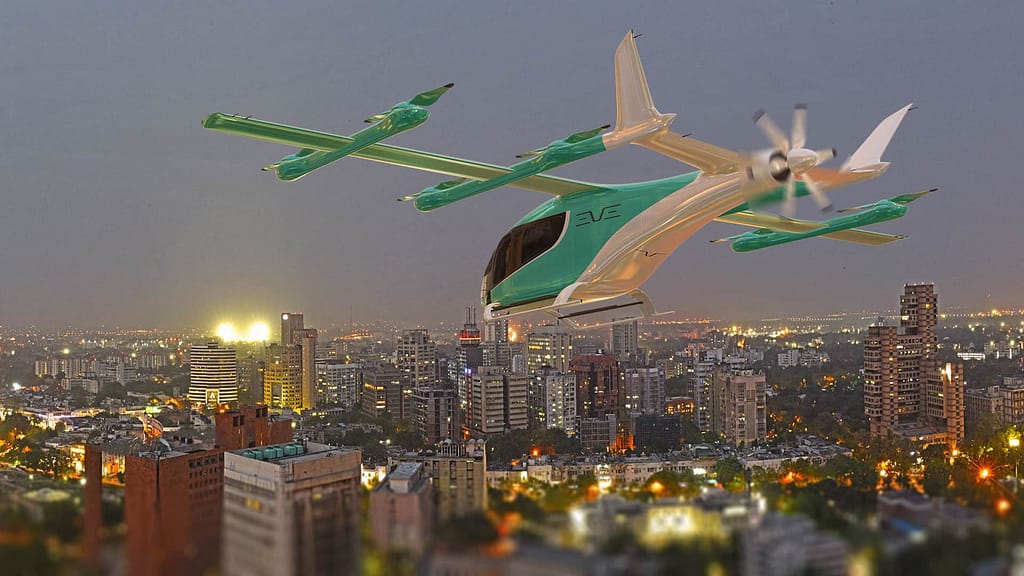
It’s worth putting this against Embraer’s eVTOL venture, Eve Air Mobility, based in São Paulo. Eve is taking the more traditional aerospace route: a conventional “lift + cruise” aircraft, developed in-house using Embraer’s decades of civil aviation certification experience, aimed squarely at FAA- and ANAC-grade type certification before any commercial flight happens. Eve flew its first full-scale prototype in December 2025 and conducted a demonstration flight for Brazilian President Luiz Inácio Lula da Silva and aviation officials in March 2026, but the company has since pushed its own certification target back to 2028, with first deliveries expected only after that.
The contrast is the real story. China’s manufacturers are racing to get vehicles into commercial hands now, leaning on a domestic regulator willing to move fast and a government treating low-altitude flight as strategic industrial policy — accepting narrower routes, high prices, and a “ship it, then iterate” posture in the process. Eve is betting the opposite way: slower, more conservative, aiming for the kind of broad, multi-market certification that could eventually make eVTOLs boring, routine infrastructure rather than a novelty ride. Neither approach has “won” yet. China has real aircraft carrying real passengers today; Brazil (and Embraer’s global ambitions) may end up with the aircraft the rest of the world’s regulators actually trust first. Whether the future of urban air mobility arrives faster through speed or through patience is, right now, a genuinely open question.