



Failed Because of ChatGPT?

How Students Can Actually Use AI Well
eyesonbrasil
Amsterdam, September 29, 2026 – It’s a story you hear more and more often these days, even though it’s rarely said out loud: a dissertation, prepared over months, fails a plagiarism or AI check. A term paper gets rejected as “not independently produced.” An examination board asks follow-up questions the student can’t answer — because the text they submitted was never really theirs.
This isn’t an isolated case anymore. It’s a structural problem universities worldwide are currently renegotiating.
The Temptation Is Real — And No One Should Be Ashamed of Feeling It
Anyone who has sat in front of a blank document after a long day, deadline creeping closer, knows the impulse: open ChatGPT, paste in the assignment, done. Ten minutes instead of ten hours. The beer on the couch already earmarked as a reward.
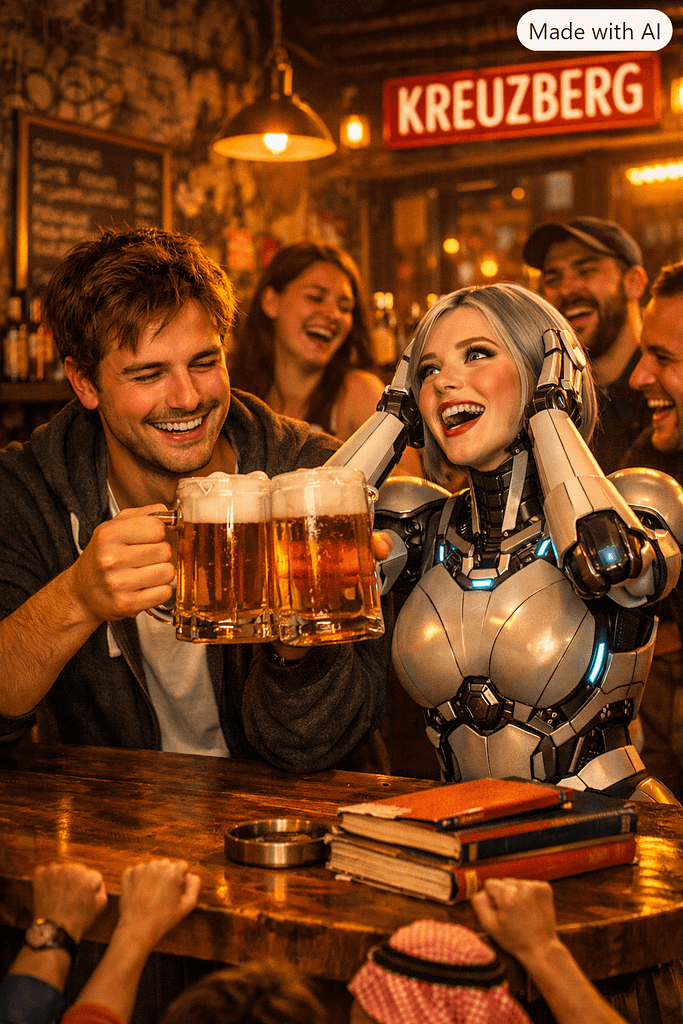
The point isn’t to condemn that temptation. The point is to understand why it’s so dangerous — not just because you might get caught, but because it robs you of the very thing university is supposed to be for.
Why “Letting AI Do Everything” Backfires
It’s increasingly getting caught. AI-detection tools are improving, but more importantly: supervisors often notice without any software at all — from a break in writing style, arguments that are suspiciously polished, citations that turn out not to exist (a well-known issue with AI-generated references), or simply because the oral defense doesn’t match the written text.
It undermines the very thing the grade is supposed to certify. A degree is a promise to future employers or the academic community: “This person can think, research, and argue independently.” If the text came from an AI, that promise is empty — even if no one notices right away.
It robs you of the actual skill. This may be the most underrated point of all: students who let themselves be “prompted through” their studies miss out on exactly the training that matters later — the difference between someone who can work through complex problems on their own, and someone who’s lost without the tool.
How to Use AI Meaningfully Instead
The good news: the alternative to “AI does everything” isn’t “never touch AI at all.” There’s a broad, legitimate middle ground — you just need to know it, and respect your university’s specific rules.
As a sparring partner, not a ghostwriter. Have the AI generate counterarguments to your own thesis before you write it. Let it expose gaps in your reasoning. The text stays yours — the AI just sharpens it.
For structuring, not for phrasing. Brainstorming an outline, listing possible chapter topics, sorting notes into a logical order — this saves enormous time without a single sentence of the actual paper coming from the AI.
For understanding, not for bypassing. If you don’t understand a concept from a lecture, have an AI explain it to you multiple different ways until it clicks — that’s learning with tool support, not cheating. The difference: at the end, you can explain it, not just the AI.
For proofreading, not for writing. Checking grammar, style, and clarity — comparable to the editing help students used to get from classmates or writing centers. The content and the argument still have to come from you.
Always disclose it when your university requires it. Many faculties now explicitly allow AI use — but require you to state exactly how it was used. That’s not bureaucracy for its own sake; it’s the only way academia is currently figuring out where the new boundaries sensibly lie.
The Real Question Isn’t “AI Yes or No”
It’s this: are you using the tool to think better — or to avoid thinking at all? That second option feels fantastic on a Friday evening with a beer on the couch. On the day of the oral exam, when a follow-up question comes that you can’t answer, it feels catastrophic.
Anyone who has failed because of AI misuse hasn’t reached the end of the road — universities now see this problem often enough that most have established procedures: resit exams, deadlines for revision, sometimes even advising services specifically for this issue. The setback is real, but it doesn’t have to be the last word.