While world leaders gathered in New York for the UN General Assembly last week, Paraguay quietly ran a masterclass in economic diplomacy. President Santiago Peña didn’t just attend the General Assembly — he used the sidelines to stage the Paraguay Investment Forum, opening it in front of 50 local business leaders and 150 investors from other countries. Two days later, at J.P. Morgan’s headquarters, his ministers were still in the room, walking specific projects past specific financiers.
For Suriname — sitting on an oil and gas windfall that could bring in an estimated $16 to $26 billion over the life of the GranMorgu project alone — the contrast is instructive. Paraguay has no oil boom. What it has is a government that decided the way to build wealth was to show up where the money is, again and again, with a plan investors could actually act on.
Lesson One: Bring the President, Not Just a Brochure
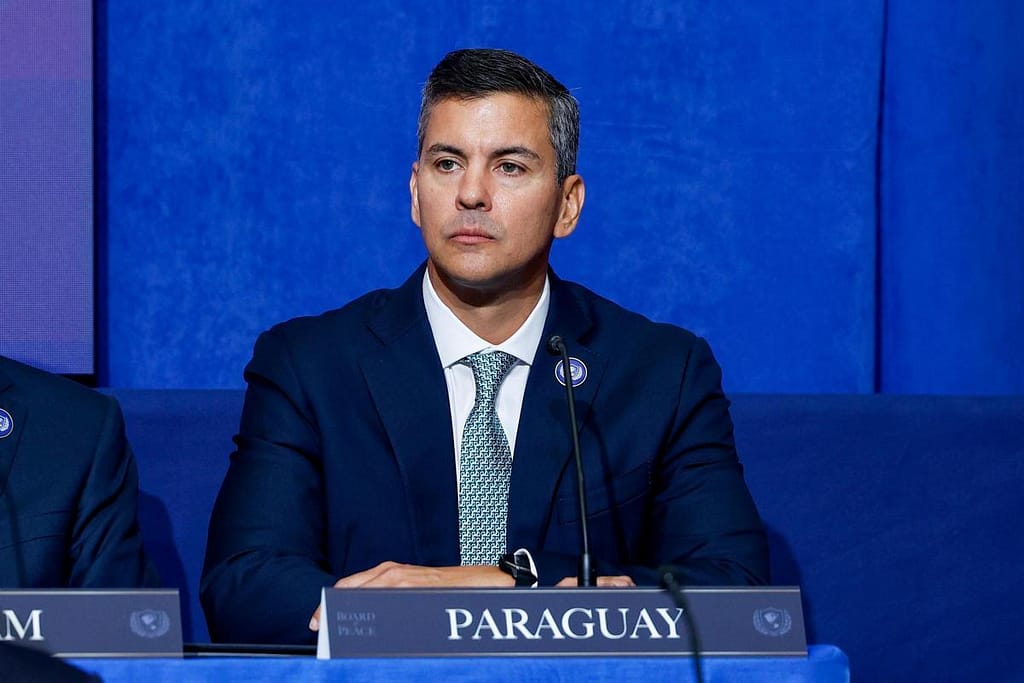
Paraguay didn’t send a trade delegation to New York. It sent President Peña himself, who told the room “Paraguay is here for the long term. We are not here looking for the shortest path to success.” That line mattered as much as any spreadsheet.
President Peña
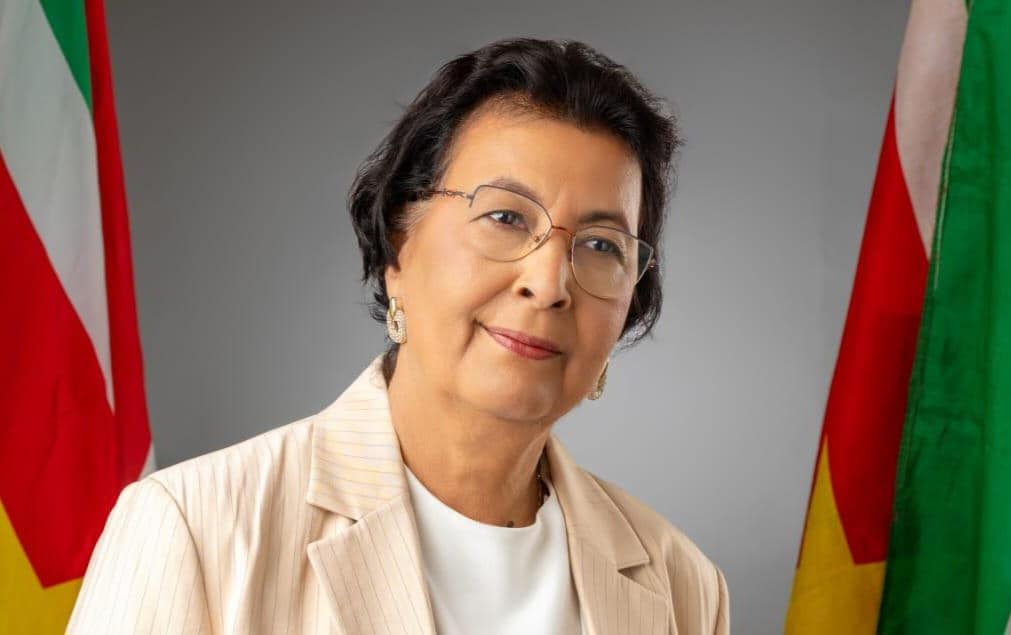
Suriname has an equivalent card, and its new head of state is already playing it in her own register. President Jennifer Geerlings-Simons, sworn in as Suriname’s first female president in July 2025, used her inaugural address to tell citizens directly that the incoming government has the task of ensuring that the profits from the oil and gas sector improve the standard of living for every Surinamese, warning that there is little time left to prepare for this new phase in the economy. More recently, touring TotalEnergies’ facilities at the Kuldipsingh Port in September, she saw the equipment for GranMorgu with her own eyes for the first time and declared simply: “No turning back.” She’s also been candid that oil alone won’t carry the country — telling citizens that not studying or learning a trade won’t automatically bring wealth just because there is oil; people need to be able to do something.
President Jennifer Geerlings-Simons
That combination — urgency, personal witness of the project, and blunt honesty about what oil can’t do alone — is a compelling story. What it hasn’t yet become is a pitch. Paraguay converts its president’s convictions into a room full of capital twice a year. Simons has the conviction; Suriname now needs the room.
Lesson Two: Sell Sectors, Not Just the Country
Paraguay’s forum was organized around named sectors with named projects — infrastructure, logistics, agro-industry, forestry, energy — each with a minister or executive on hand to answer technical questions. A forestry panel brought together four specific companies to make the case with hard numbers: land availability, plantation growth rates, river logistics.
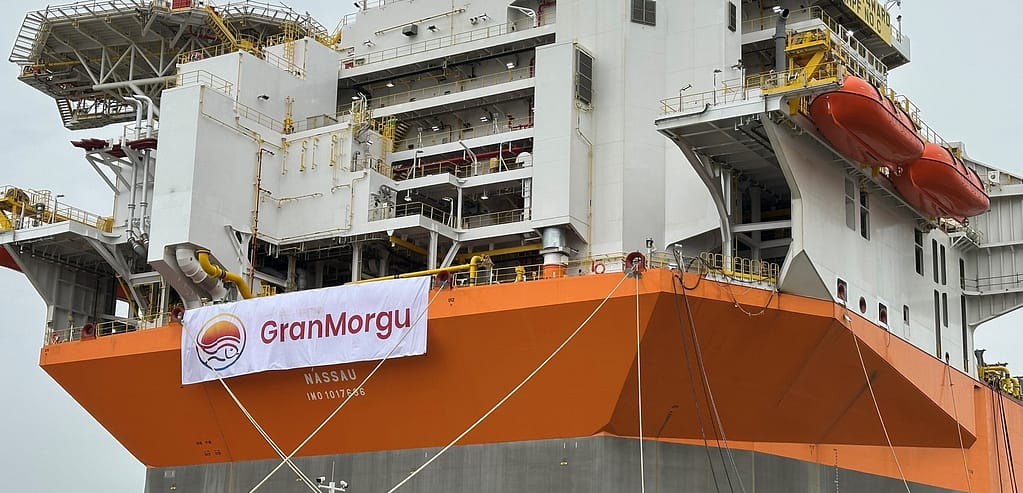
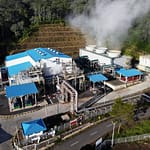
GranMorgu
Suriname’s story is arguably bigger, but needs the same specificity. GranMorgu is now roughly half complete, developing 760 million barrels across the Sapakara and Krabdagu fields. Alongside it, gas is emerging as its own investment case: PETRONAS and Staatsolie have declared commercial viability at the Sloanea field in Block 52. President Simons’s own emphasis on infrastructure, education and technical training points to exactly the kind of adjacent sectors — ports, vocational training, local supply chains — that a forum could pitch alongside the oil headline itself, echoing her chief of staff’s stated aim of steering oil revenue toward agriculture and food security too.
Lesson Three: Borrow Wall Street’s Own Muscle
Paraguay co-hosted its forum with Bank of America and J.P. Morgan — instant credibility, and a room full of capital Asunción could never assemble alone. Bank of America’s own banking chief used the platform to publicly praise Paraguay’s hydropower resources as a strategic industrial advantage.
Suriname already has a toehold here: Staatsolie secured a $1.6 billion loan in 2025 to fund its 20% GranMorgu stake and works regularly with international lenders. Formalizing that relationship into a recurring, bank-hosted investment forum — rather than case-by-case financing calls — would put Suriname in front of the same investors Paraguay just courted, at a moment when Guyana’s success next door has the whole basin’s attention.
Lesson Four: Numbers Big Enough to Matter — Framed Honestly
Paraguay’s forum drew on scale: 150-plus investors, growing to 200-plus by day two. Suriname’s numbers are, if anything, more dramatic — a $10.5 billion single project in a country whose entire onshore oil sector generated $722 million in 2023. But President Simons has been unusually candid that this windfall won’t fix everything at once — comparing the task to trying to turn “a mud puddle into a glass of water in just one step.” That candor, delivered to the right room of investors, reads as credibility rather than caution. Paraguay’s pitch works because it doesn’t oversell; Suriname’s could too.
The Harder Lesson: Don’t Let the Windfall Undercut the Pitch
Paraguay leaned heavily on clean hydropower as its calling card for industrial investment. Suriname holds an even rarer asset among new oil producers: a rainforest-driven, carbon-negative status that TotalEnergies has pledged to help preserve, alongside a design for GranMorgu meant to keep emissions intensity low. Just weeks ago, President Simons was also grappling publicly with pollution reports tied to mining activity along the Saramacca River — a reminder that the environmental story cuts both ways, and that a forum showcasing Suriname’s green credentials will only land if the government is seen protecting them at home, too.
The Bottom Line
Paraguay has spent years building the institutional habit of turning moments like UN week into hard capital commitments. Suriname now has something Paraguay doesn’t: a generational resource windfall on a fixed 2028 timeline, and a new president who has already found the right words for it — urgency, honesty, and a “no turning back” resolve. What’s missing is Paraguay’s format: a recurring, bank-backed, sector-by-sector forum that turns those words into a room full of term sheets. Get that right, and Suriname’s oil boom could arrive not just as a resource event, but as proof that a small country’s president can sell the world on its future — and mean it.