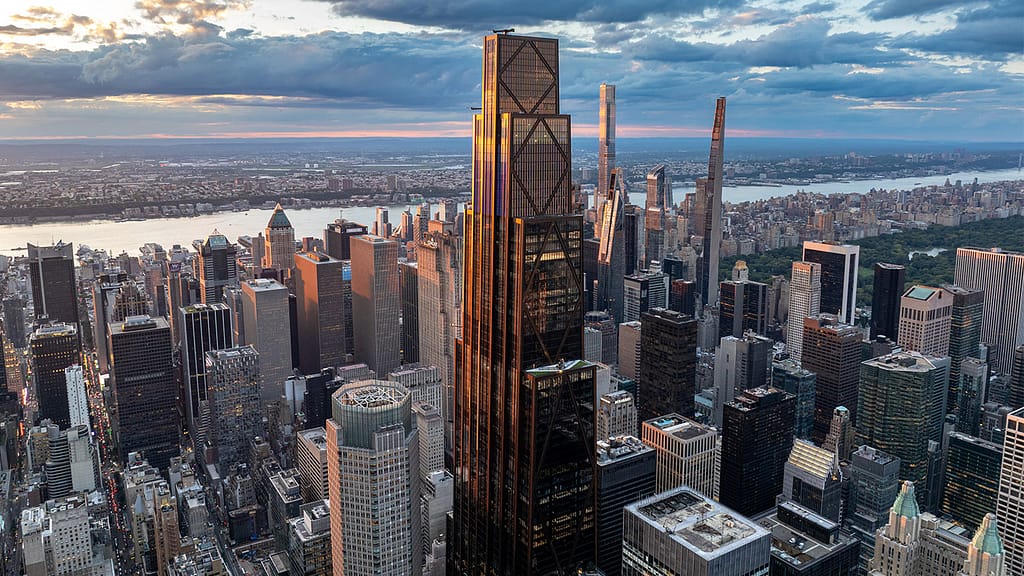
Amsterdam, September 28, 2026 – Amid the crush of world leaders and dealmakers who descend on New York every September for the UN General Assembly, Paraguay carved out something rarer than a seat at the table — it hosted its own. The Paraguay Investment Forum 2026, held over two days in Manhattan, brought together more than 150 international investors and 50 Paraguayan business leaders in an event explicitly designed to move Paraguay’s pitch from slideshow to signed deal.
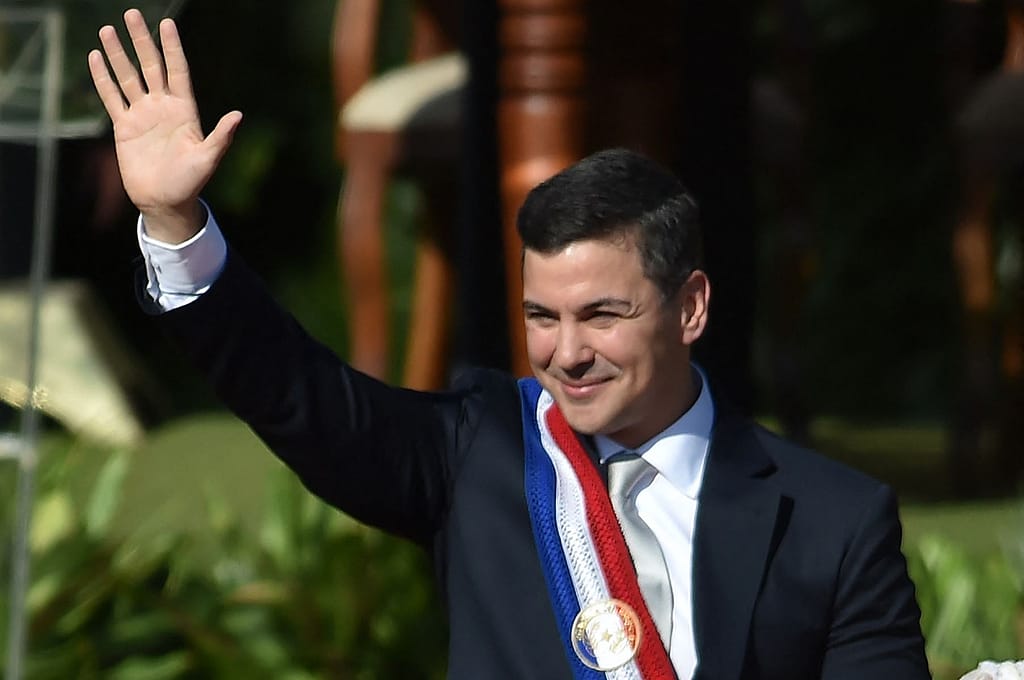
President Santiago Peña
President Santiago Peña opened the first day, called “Discover Paraguay,” at Bank of America’s New York offices, telling the room bluntly: “Paraguay is here for the long term. We are not here looking for the shortest path to success.” The second day, “Invest in Paraguay,” moved to J.P. Morgan’s headquarters, where Industry and Commerce Minister Marco Riquelme addressed more than 200 investors and highlighted the presence of 60 Paraguayan entrepreneurs, framing the country as a market ready to convert capital into development.
What made this forum notable wasn’t just the guest list — it was the choice of co-hosts. The event was organized jointly with Bank of America and J.P. Morgan, giving Paraguay’s pitch the imprimatur of two of Wall Street’s biggest institutions rather than a government roadshow alone. The stated goal was to move beyond promoting the country’s general economic conditions and toward direct contact between concrete projects and potential investors.
The sectors on the table
Paraguay’s pitch wasn’t scattershot. Officials organized their presentations around a defined set of strategic sectors:
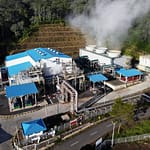
Clean/renewable energy — anchored by Paraguay’s hydroelectric wealth. Bank of America’s president of Global Corporate and Investment Banking, Alexander Bettamio, singled out Paraguay’s hydroelectric resources as a strategic advantage for a new wave of industrialization.
Agribusiness and bioeconomy
Forestry
Infrastructure and logistics
Advanced manufacturing
Financial services
These were the areas the forum highlighted as strategic for Paraguay’s economy going forward, and on day two, Minister Riquelme got more specific, presenting projects tied to infrastructure, logistics, manufacturing, agroindustry, the forestry sector, and energy directly to U.S. financial market players.
Money already moving
The forum wasn’t purely aspirational — it produced at least one headline-grabbing deal. J.P. Morgan Asset Management’s Natural Capital arm announced a roughly $200 million investment to build a large-scale sustainable forestry platform in Paraguay, in partnership with local group Grupo Robinson. The partners aim to advance Paraguay’s industrialization by processing timber locally, adding value at the source, and producing finished goods for both domestic and export markets, with capital deployment expected to begin in early 2027. J.P. Morgan Natural Capital’s CEO, Angela Davis, called it a chance to build a scalable, long-term forestry platform rooted in sustainable resource management and rural development.
Angela Davis, CEO of J.P. Morgan Natural Capital
That deal sits on top of a foreign-investment base Paraguay has been quietly building for over a decade through its maquila (export-manufacturing) regime and Law 60/90 tax-incentive framework. A few examples of who’s already there:
Automotive-parts multinationals, which set up wire-harness and electrical-component plants in 2013 and have since grown to employ almost 7,000 people while exporting more than $280 million in 2023.
Textile and apparel manufacturers producing jeans, t-shirts, sportswear and underwear for export, representing about a fifth of maquila-regime exports.
Brazilian, Argentine, U.S. and Chinese investors broadly, drawn by tax incentives, macroeconomic stability and a skilled workforce — with Brazilian companies leading investment thanks to geographic proximity and trade agreements, while U.S. and European firms have concentrated more in high-tech and advanced manufacturing.
Newer entrants in plastics, chemicals, pharmaceuticals, footwear, and even electric bicycles and biodiesel, reflecting a maquila sector that has diversified well beyond its auto-parts-and-textiles origins.
Altogether, Paraguay’s maquila platform now supports over 300 approved companies and generates more than $1 billion a year in exports — a modest number by regional standards, but one built almost entirely on foreign capital choosing Paraguay over its larger neighbors.
Final thought: the quiet advantage of staying out of the blast radius
There’s a wider story that gives this forum extra weight. While Paraguayan officials were courting bankers in Manhattan, Brazil — South America’s largest economy — was still absorbing the fallout from Washington’s tariff war. After President Trump imposed a 50% tariff on Brazilian goods in mid-2025, Brazilian exports to the U.S. fell 6.6% for the year, totaling $37.7 billion against $40.3 billion in 2024, even as U.S. imports into Brazil rose 11.3%, leaving Brazil with a $7.5 billion trade deficit with the United States. Even after partial rollbacks, 22% of Brazilian exports to the U.S. — about $8.9 billion worth — remained subject to the tariffs as of early 2026.
Brazil has cushioned the blow by leaning harder on China and diversifying trade partners, and economists broadly agree the macro damage has been limited rather than systemic. But the episode has been a reminder of what it costs a large, geopolitically visible economy to become entangled in Washington’s politics.
Paraguay, by contrast, is small enough, and diplomatically aligned enough with Washington, to stay out of that particular storm — and it is using the moment to make itself impossible to ignore. A country of roughly 7 million people, running a Wall Street-backed investment forum with the sitting president pitching hydropower and timber deals directly to J.P. Morgan and Bank of America, is not competing with Brazil’s scale. It’s competing on something else: predictability. In a region where trade relationships with the United States can be redrawn overnight by a single tariff announcement, Paraguay’s pitch — stable, dollarized incentives, tax certainty under Law 60/90, and a currency of hydroelectric power rather than geopolitical friction — starts to look less like a consolation prize and more like a genuinely differentiated bet for investors trying to de-risk their Latin American exposure.