


Who Pays for the Green Dream?

Mike Benz on Brazil, Energy and Power
eyesonbrasil
Editor’s note: this article summarizes a thesis put forward by American commentator Mike Benz in a recent interview about climate change and renewable energy in Brazil. It presents the argument as he and his supporters make it, and it is not an endorsement. Brazilian production figures come from public reporting; the counterarguments appear at the end.
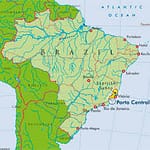
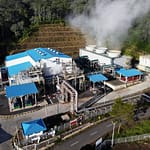
Brazil sits on some of the most valuable energy real estate on earth. Beneath its Atlantic waters, the pre-salt fields are producing at record levels. Brazil’s oil and natural gas output hit a record 5.304 million barrels of oil equivalent per day in February 2026, with the pre-salt layer supplying more than 80% of it. Petrobras then reported record production again in the second quarter, with net income of R$52.4 billion. The country is also a leader in renewables, with a grid built largely on hydropower.
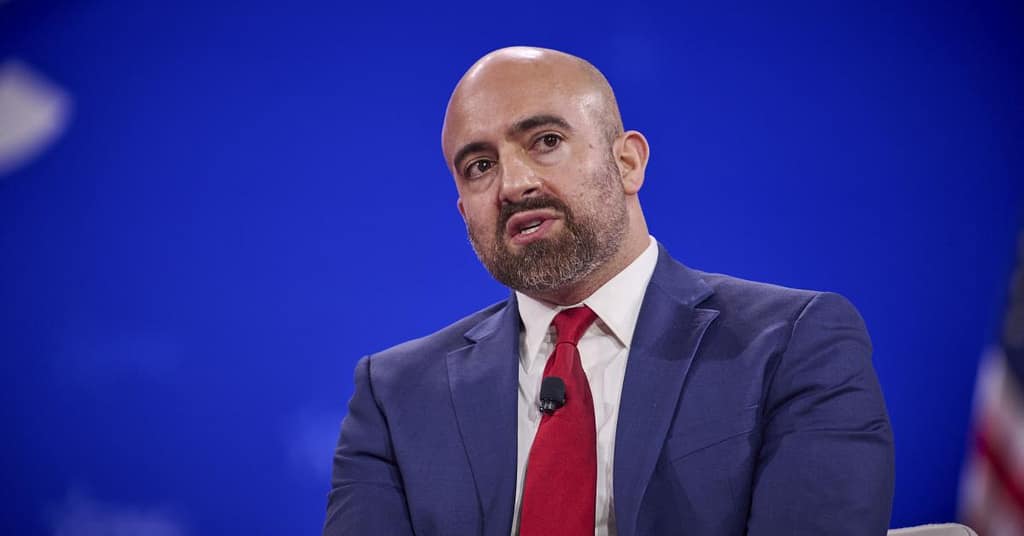
According to Mike Benz, this combination makes Brazil an interesting test case. It asks a question that is uncomfortable for both sides of the climate debate: if a cleaner energy source were truly cheaper, why would anyone need to force it on a country?
The core argument: markets don’t need mandates
The reasoning is simple. In a genuinely competitive market, producers and consumers choose the cheapest reliable energy. Brazil has abundant oil and gas that, by industry estimates, can be produced profitably at fairly low prices, with pre-salt breakeven costs put at roughly $30 to $40 a barrel. In Benz’s view, if wind, solar and the batteries that back them up were clearly cheaper for the whole system, they would win without help, the same way smartphones displaced landlines.
The thesis holds that where renewables are not clearly cheaper, someone has to make the choice for people. Mandates, quotas, subsidies, carbon rules and phase-out dates all do that. Each of them takes a decision away from the market and gives it to the state. The more expensive the preferred option, the stronger the state needs to be to impose it.
The political economy: who benefits from strong states?
That is where the argument turns to power. Large investors, in this view, have enormous sums committed to renewable projects, green finance, and supply chains for solar panels, turbines and batteries. A guaranteed buyer is worth more to them than a competitive market, and nobody is a more reliable buyer than a government that has made renewables legally mandatory.
So the claim is that wealthy backers of the energy transition have an incentive to favor governments, democratic or not, that can override consumer preferences, shrug off public anger over higher bills, and sign long-term commitments that outlast elections. In its most pointed form, the argument says a strong centralized government is the best partner for anyone whose product only wins when it is required, and that this logic can attract support for less democratic systems, including state-heavy governments on the left.
Brazil makes the point vivid. A country with cheap domestic oil and gas, a large poor population that feels every rise in fuel and electricity prices, and a democratic system in which voters can object, is the hardest place to push a costly transition. That, the thesis suggests, is why Brazil attracts so much international attention and pressure.
The human stakes
The practical concern behind the argument is ordinary households. Energy costs shape the price of food, transport and everything else. For a family that depends on a motorbike, a bus and a gas cylinder, a policy that raises those costs by even a modest amount can matter more than any slogan about the planet. Supporters of this view say that energy policy should be decided by voters who bear the costs, not designed in distant boardrooms and negotiated at international summits.
The simple takeaway
Even for readers who disagree with every conclusion, the thesis raises a fair question: who decides how fast an energy transition should go, and who pays? A policy that can only succeed if it avoids public consent deserves scrutiny.
What critics would say
- Renewables are often cheaper now. In much of the world, new wind and solar power is among the cheapest sources of electricity to build, and Brazil’s wind and solar growth has largely come through competitive power auctions. Critics say the “can’t compete in a free market” premise is out of date, though the cost of reliability (storage, backup, transmission) remains a real debate.
- Brazil’s grid is already mostly renewable. The country gets much of its electricity from hydropower, and it expanded wind and solar significantly over the last decade. That was not imposed by an authoritarian regime. It came through democratic governments of different political orientations.
- The billionaire claim is sweeping. Wealthy investors are on every side of energy: oil and gas majors, national oil companies and fossil-fuel financiers are also huge, politically influential players. Critics say it is hard to show that renewable backers as a group prefer authoritarianism, and that the claim reads more like a polemic than evidence.
- Fossil fuels are subsidized too. Many countries support oil and gas through tax breaks, price controls and infrastructure, so “markets versus mandates” may be a false contrast. Climate scientists also argue that fossil fuels impose costs, such as pollution and warming, that markets do not price in.
- Brazil’s own interests are mixed. The country is both a major oil producer and a climate-sensitive nation with the Amazon, hydropower dependence and agriculture exposed to a changing climate. Analysts note it can pursue both strategies at once, and that doing so is not evidence of a hidden agenda.
- Democracies have chosen climate policy. Voters in free countries have supported carbon pricing and clean-energy targets, which complicates the idea that such policies need authoritarian enforcement.