


A €100 Million Opportunity for Foreign-Founded Startups in Brazil

What TECNOVA 2026/2027 Actually Means for You
eyesonbrasil
Amsterdam, August 4, 2026 – If you’re building a company in Brazil — or considering it — Brazil’s innovation funding system just opened one of its biggest doors yet, and foreign entrepreneurs are, in most cases, welcome to walk through it.
Brazil’s Ministry of Science, Technology and Innovation (MCTI) and the Brazilian Innovation Agency (FINEP) have launched TECNOVA 2026/2027, putting approximately €100 million in public grants and state matching funds behind Brazil’s largest non-repayable subsidy program for innovative small businesses. For a foreign founder navigating Brazil’s notoriously complex funding landscape, this program is worth understanding in detail — because unlike many public grant schemes worldwide, TECNOVA does not automatically exclude foreign-owned companies.
What TECNOVA Actually Is
First launched in 2012 and now in its 14th year of operation, TECNOVA is Brazil’s flagship mechanism for bridging the gap between scientific research and market-ready products, services, and processes. This is its 4th and largest edition to date: roughly €61 million comes from the National Scientific and Technological Development Fund (FNDCT), matched by approximately €39 million in state-level counterpart funding, distributed through state research foundations (Fundações de Amparo à Pesquisa, or FAPs) across all 27 Brazilian states.
This edition also introduces simplified operations, continuous evaluation flows, and performance-based tracking — a genuine attempt to reduce the bureaucratic friction that has historically made Brazilian public funding programs slow and unpredictable to navigate, including for foreign applicants unfamiliar with the system.
Can Foreign-Owned Companies Actually Apply?
This is the question that matters most if you’re not Brazilian, and the answer is more encouraging than you might expect: yes, companies under foreign control or majority foreign ownership can participate in TECNOVA, provided their economic activity falls within the sectors specified under Decree No. 2,233/1997 (Brazil’s regulation governing foreign capital participation in specific industries). In practice, this covers most innovation-driven sectors the program targets — software, technology services, biotech, industrial processes, and similar fields.
What you do need, regardless of ownership structure, is a company legally established and registered in Brazil (with a CNPJ, Brazil’s business tax ID) with annual revenues up to roughly €2.7 million (R$16 million), qualifying it as a micro or small enterprise (MSME) under Brazilian criteria. In other words: TECNOVA isn’t asking who owns your company — it’s asking whether your company is legitimately Brazilian-registered, actively developing an innovative product or process, and small enough to fit the program’s target profile. If you’ve already incorporated your startup in Brazil, foreign ownership is generally not, on its own, a disqualifying factor.
What the Money Actually Covers
TECNOVA doesn’t just fund product development. Grant resources are also allocated toward business acceleration and internationalization activities — a detail worth underlining for foreign founders specifically, since many arrived in Brazil precisely because they’re trying to build a bridge between the Brazilian market and international markets. That internationalization funding line exists to support exactly that kind of cross-border growth strategy.
The program is projected to support somewhere between 514 and 713 businesses this round, spread across the entire country.
Where the Opportunity Is Strongest
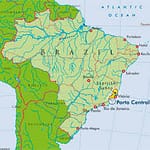
One structural detail matters a great deal for founders weighing where in Brazil to base their operations: 58% of the federal funds are specifically directed to the North, Northeast, and Center-West regions, as part of a deliberate push to strengthen innovation ecosystems outside Brazil’s traditional hubs of São Paulo and Rio de Janeiro. If your business model has any flexibility about where you’re headquartered — or if you’re already exploring opportunities in cities like Recife, Manaus, Fortaleza, or Cuiabá — this regional weighting meaningfully improves your odds relative to applying in the country’s most saturated, competitive tech corridors.
How and When to Apply
TECNOVA doesn’t run as a single national application — it’s decentralized through state-level FAPs, each running its own public call (edital) with region-specific requirements, timelines, and sector priorities. Applications go through FINEP’s SAGe system, and companies are typically required to contribute a counterpart share of the project cost, generally ranging from 5% to 20% depending on company size.
The rollout timeline is worth flagging clearly: in 2026, state research foundations are being contracted and organizing their state-level operations, with proposals from the FAPs due by August 3, 2026. The actual company-facing public calls open in 2027, with contracting of selected projects following shortly after. If you’re considering applying, the moment to prepare your project, documentation, and eligibility case is now — well before your state’s specific edital opens.
A Complementary Data Push
Alongside TECNOVA, MCTI and FINEP have launched the Data Science across Brazil project, injecting over €2.2 million to train data scientists and establish standardized state-level science, technology, and innovation indicators. For data-driven startups, this signals a broader institutional push toward building the analytical infrastructure and talent pipeline that innovation-focused companies — foreign-founded or otherwise — will increasingly rely on.
The Bottom Line for Foreign Founders
TECNOVA represents a genuinely rare combination in Brazilian public funding: real money (€100 million), explicit openness to foreign-controlled companies in most sectors, and a deliberate push toward underserved regions where competition for grants is likely to be less intense. The catch is Brazil’s characteristic bureaucratic complexity — decentralized state-by-state application processes, sector restrictions under Decree 2,233/1997 that are worth verifying with a local advisor for your specific business activity, and a rollout timeline that rewards early preparation over last-minute applications.
If you’re running an innovative small business with a Brazilian CNPJ, this is a door worth knocking on — just make sure you understand which state’s edital you’re walking through before you do.