


View From Amsterdam

What Brazil’s Institutional Storm Looks Like to Dutch Money
eyesonbrasil
Amsterdam, September 7, 2026 – The Netherlands has a bigger stake in what happens next in Brazil than most Brazilians probably realize. Behind the United States, the Netherlands is consistently one of the two or three largest single sources of foreign direct investment position in Brazil — a status built partly on real operating businesses like Heineken, Shell, Philips and ABN AMRO, and partly on the country’s role as a global hub for holding companies that route capital into Brazilian subsidiaries. By some measures, the Netherlands alone accounts for over 40% of Europe’s entire FDI position in the country. So when the Supremo Tribunal Federal spends a week consumed by two justices accusing each other of abuse of power, in a fight tangled up with the biggest bank fraud in the country’s history, the question of how that reads in The Hague, Rotterdam and Amsterdam boardrooms is not an academic one.
A Scandal That Reads Differently From Abroad
For a Brazilian audience, the Mendonça-Moraes clash is mostly a story about power inside the STF. For foreign capital, it is something closer to a stress test of the machinery meant to protect it. Risk advisories written for international investors in the months since Banco Master’s collapse have been notably blunt about this. One analysis prepared for multinational clients described the case as Brazil’s most consequential corruption scandal since Operation Car Wash and urged companies to “proactively prepare for the likely aftershocks” to the country’s financial and regulatory systems. A separate note from a law firm’s regulatory-risk team went further, warning that the collapse exposed how a banking license paired with a digital distribution channel can scale fraud “faster than supervision cycles” built for a branch-based banking era were ever designed to catch.
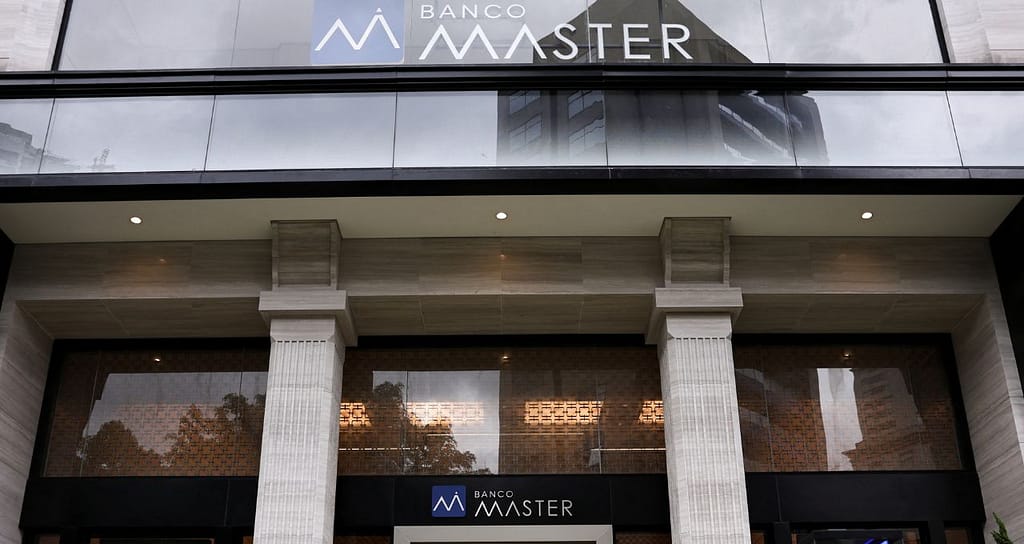
What unsettles foreign observers most is not the fraud itself — banking fraud happens everywhere — but its reach. Investigators allege the scheme touched Central Bank regulators, sitting and former Supreme Court justices’ family members, senators, and a former Rio de Janeiro state governor’s handling of public pension funds. For a Dutch pension fund or corporate treasurer used to a system where the Central Bank, the courts and the deposit insurer are assumed to be watertight from the entities they oversee, that breadth is the unsettling part — not any single allegation, but the sense that several supposedly independent checks may have failed at once.
The Legal-Certainty Gap
Dutch business culture places unusual weight on legal predictability. The Netherlands built its position as a global holding-company hub in large part on the promise of stable, English-language commercial courts, a deep bench of international arbitration institutions, and — crucially — a network of roughly 75 bilateral investment treaties designed to guarantee foreign investors fair treatment and protection against arbitrary state action. That is the yardstick Dutch entrepreneurs and asset managers instinctively bring with them when they evaluate Brazil.
Begin niet met investeren. Begin met begrijpen
Brazil, by most accounts, does not fail that comparison outright — its courts are independent, its arbitration culture has matured, and it remains one of the world’s top destinations for FDI inflows. But the gap Dutch investors have long flagged is less about the law on the books than about its unpredictability in practice: shifting tax regimes, slow and inconsistent licensing across federal, state and municipal levels, and now a judiciary whose own internal credibility is, for the moment, publicly in question. A Dutch-Brazilian business advisory that guides companies through market entry puts the lesson from decades of Dutch experience in the country plainly: “Begin niet met investeren. Begin met begrijpen” — don’t start with investing, start with understanding. It is advice that reads rather differently in a week when investing itself has become entangled with two Supreme Court justices’ internal war.
What This Likely Changes, and What It Probably Won’t
None of this points toward a Dutch exodus. Brazil’s fundamentals — a market of more than 210 million people, a largely renewable electricity grid, and deep opportunities in agribusiness, logistics and energy that play directly to Dutch expertise — are not undone by a single scandal, however large. Risk advisers are not telling clients to leave; they are telling them to look harder. Due diligence on Brazilian financial partners now routinely goes beyond balance-sheet analysis to interrogate deposit composition, ultimate beneficial ownership and political exposure — a level of scrutiny that would have seemed excessive before Master’s collapse and is now treated as baseline practice.

What is more likely to shift is patience with ambiguity. Institutional investors, and pension funds in particular, tend to price in a “complexity premium” for markets where the rules can move under them — and a Supreme Court that cannot currently agree on its own internal rules is, for exactly as long as that lasts, a harder market to underwrite confidently. Entrepreneurs weighing a first move into Brazil, rather than adding to an existing position, are the ones most likely to pause: for them, the Banco Master affair and the STF’s internal war are not proof Brazil is uninvestable, but they are one more item on the list of things a due-diligence team now has to explain to a board back in Amsterdam before a signature gets applied.
The Same Argument, From a Different Angle
Seen this way, the Mendonça-Moraes standoff is not really a separate story from the one Brazil tells itself every September 7th about the price of freedom and the limits of power. It is the same argument, translated into the language international capital understands best: risk premiums, due-diligence checklists, and the quiet decision of a foreign board to wait one more quarter before wiring the money. Brazil’s institutions arguing loudly and publicly with each other is, as before, not necessarily a sign of decay — but it is, for now, a cost. Whether Dutch and other foreign capital treats that cost as temporary friction or as a lasting repricing of Brazilian risk will depend less on how this particular scandal ends than on whether the STF can show, in the months ahead, that it can hold its own accountable without tearing itself apart in the process.

This piece draws on institutional-risk commentary published by international law firms and risk advisories in 2026 in connection with the Banco Master case, alongside publicly available Dutch–Brazilian trade and investment data. Figures on FDI shares and treaty coverage are approximate and change as new data is published.