


Two Centuries After Tiradentes

Brazil’s Unfinished Argument With Itself
eyesonbrasil
Amsterdam, September 6, 2026 – Every September 7th, Brazil pauses to remember a man who never lived to see the country he helped imagine. Joaquim José da Silva Xavier — Tiradentes — was hanged and quartered in 1792 for conspiring against Portuguese colonial rule, his body parts displayed along the road to Vila Rica as a warning to anyone who dreamed of a free Brazil. The Republic he never saw would later name him a national hero, turn his execution date into a public holiday, and build monuments to the idea that freedom is worth dying for.
More than two centuries later, that same week finds Brazil’s highest court consumed by a very different kind of fight — one that has nothing to do with muskets or gallows, and everything to do with the slower, messier work of holding a democracy’s own guardians accountable.

A Court Turning on Itself
In early September 2026, an extraordinary rift opened inside the Supremo Tribunal Federal (STF) between two of its sitting justices: Alexandre de Moraes, the court’s most prominent and most polarizing figure, and André Mendonça, a Bolsonaro appointee and former justice minister who has increasingly positioned himself as a counterweight inside the tribunal.
The immediate trigger was not a free-speech ruling but a financial scandal: the collapse of Banco Master, the bank run by Daniel Vorcaro that was liquidated by Brazil’s Central Bank in late 2025 amid allegations of large-scale fraud. Mendonça, as the justice overseeing the related inquiries, lifted judicial secrecy on parts of the investigation — a move that exposed communications between Vorcaro and Moraes himself, along with other public officials. Moraes responded by petitioning the court’s president, Edson Fachin, to open a formal investigation into Mendonça, accusing him of overstepping his authority, mishandling plea-bargain negotiations, and directing the probe toward a fellow magistrate. Fachin has since moved the dueling petitions out of the court’s long-running “fake news” inquiry and into a direct presidential review, giving both justices days to respond.
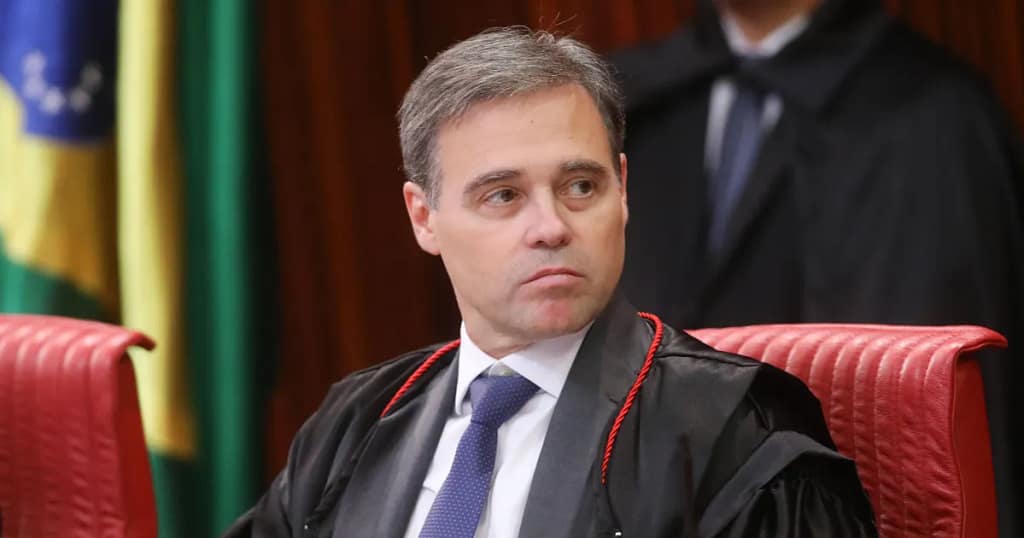
It is, by most accounts, an unprecedented spectacle: two sitting members of Brazil’s highest court formally accusing each other of abuse of power, playing out in public just as the country heads toward next year’s elections.
What Banco Master Is Accused of Doing
To understand why a mid-sized bank could end up destabilizing Brazil’s Supreme Court, it helps to understand the scale and mechanics of what investigators say happened.
Banco Master, controlled by businessman Daniel Vorcaro, built its growth by selling bank deposit certificates (CDBs) at interest rates far above what its competitors could sustainably offer — reportedly as high as 130% of the benchmark CDI rate. Prosecutors allege this amounted to a Ponzi-like structure: money raised from new depositors was funneled into a credit fund in which Master itself was effectively the only investor, and from there allegedly diverted into companies tied to Vorcaro’s family and associates rather than into the productive assets depositors were told backed their returns. Separately, investigators say the bank issued more than 250,000 “ghost” payroll loans — consignado credit lines deducted automatically from salaries and pensions — without evidence that the borrowers had ever authorized them, compounding losses tied to Brazil’s social security institute, the INSS.
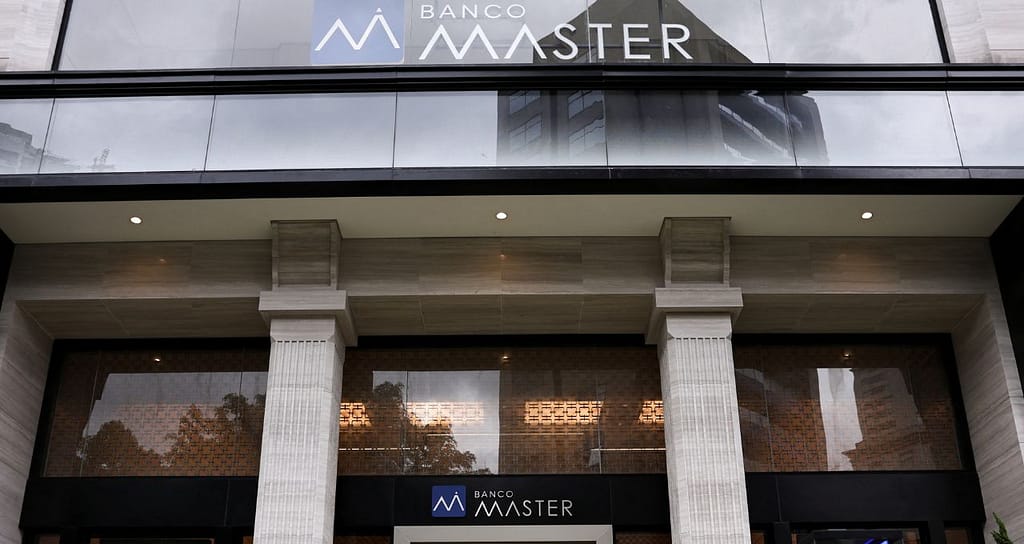
When the Central Bank moved to liquidate Banco Master in November 2025, it bypassed ordinary judicial proceedings to prevent a bank run, and Brazil’s deposit insurance fund (FGC) has since reported an estimated R$41 billion hit — described as the largest loss in the fund’s history. Vorcaro was arrested days later at a São Paulo airport as he allegedly attempted to board a private flight out of the country; he has denied wrongdoing and says he is cooperating with investigators. Police have since described the operation as involving not just financial engineering but an alleged institutional-corruption unit targeting Central Bank officials, a money-laundering network with reported ties to organized crime, and an intelligence arm accused of tracking police movements in advance.
The scandal’s reach into Brazil’s political and judicial elite is what transformed a banking-fraud case into a full-blown institutional crisis. Press reporting — some of it disputed — has linked payments or business ties from Master or its associates to a former finance minister, a former Supreme Court justice, and a law firm run by Justice Moraes’s wife, among others; Justice Dias Toffoli, who initially oversaw the case before Mendonça took over as rapporteur, faced scrutiny after accepting a charter flight from a lawyer connected to the bank. None of this establishes wrongdoing by any individual named — these are allegations under active investigation, several of them contested by the people involved — but together they explain why so much of Brasília’s political class has been watching the Mendonça-Moraes standoff so closely: the documents at the center of the fight are the same ones that could implicate figures far beyond the two justices themselves.
Why It Resonates as a Freedom Story
The reason this internal squabble has attached itself so quickly to the language of “freedom of speech and justice” is that Moraes arrives at this moment already carrying that reputation on his shoulders — for better or worse, depending on whom you ask.
Over the past several years, Moraes has become the face of the STF’s aggressive posture toward disinformation and anti-democratic movements: ordering the suspension of platforms like X and Rumble, leading the prosecution of former president Jair Bolsonaro and his allies over an alleged coup plot, and drawing praise from supporters who see him as the man who kept Brazilian democracy from unraveling after 2022. He has also drawn fierce criticism — from Brazilian conservatives, from Elon Musk, from members of the U.S. Congress, and eventually from the U.S. Treasury Department itself, which sanctioned him last year over what it called politicized prosecutions and the suppression of expression. To his critics, he is a justice who rewrote the boundaries of his own power in the name of protecting democracy. To his defenders, he is the reason that power was contained at all.
Mendonça, for his part, has often been read — by allies and opponents alike — as the institutional voice most willing to push back against that consolidation of authority from inside the court itself. Whether his handling of the Banco Master files was principled oversight or a politically convenient strike against a rival is, as of this writing, exactly what the STF itself has yet to decide.
The Deeper Argument Brazil Keeps Having
Strip away the specifics of Vorcaro’s phone records and plea deals, and what remains is a question Brazil has been asking in different forms since Tiradentes stood on that scaffold: who gets to define the limits of power, and who watches the watchmen?
Tiradentes died resisting a crown that answered to no one inside Brazil. Two hundred years on, the debate is not about a foreign monarch but about the proper boundaries of an unelected court that many Brazilians credit with saving their democracy — and that others accuse of overreaching in the process of doing so. Both readings can be sincerely held. Both have real evidence behind them. That tension is not a sign that Brazilian democracy is failing; arguably, it is a sign that its institutions are still capable of being questioned, even from within.
That may be the most honest inheritance of the independence movement Brazil celebrates each September 7th: not a finished freedom, secured once and preserved forever, but an ongoing, occasionally ugly argument about how power should be checked — conducted this year not in the streets of Vila Rica, but in the petitions and public sessions of the country’s highest court.
This account reflects reporting available as of early September 2026 on a fast-moving, contested institutional dispute. The underlying investigations are ongoing, and both justices’ positions may shift as the STF proceeds.