


Brazil’s Rise

How a Nation of Culture and Color Became the World’s Tourism Comeback Story
eyesonbrasil
Amsterdam, August 7, 2026 – There are moments when a country’s story shifts — when the world stops seeing it through old assumptions and starts seeing it as it truly is. For Brazil, that moment is now.
Between 2019 and 2025, Brazil welcomed international travelers at a pace few nations could match. Visitor arrivals climbed from 6.3 million to 9.3 million — a 46% increase, according to the OECD’s Tourism Trends and Policies 2026 report. That growth rate outpaced tourism giants like Japan, Portugal, Spain, and France, placing Brazil fourth in the world for post-pandemic tourism recovery.
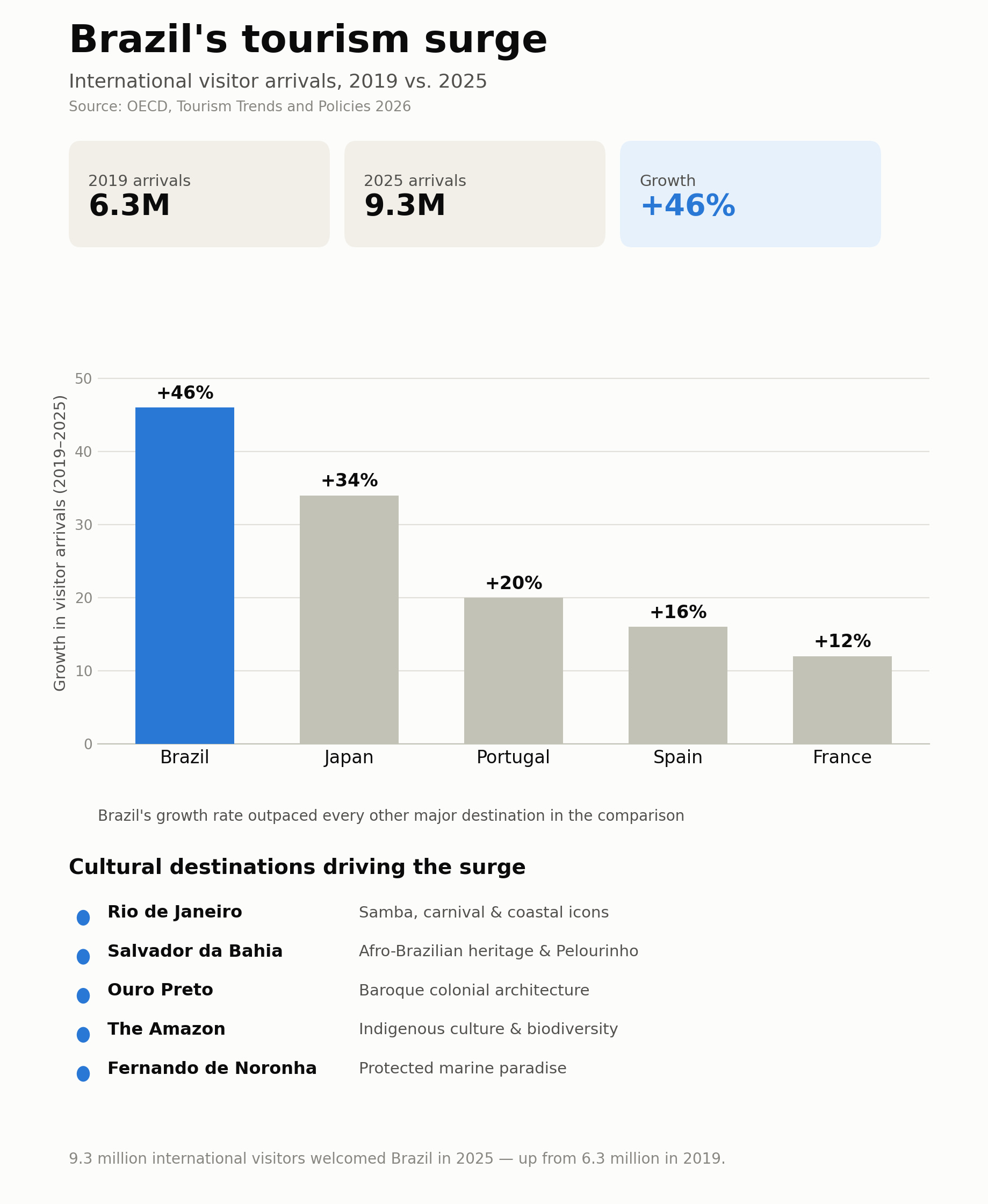
But behind every statistic is a reason. And Brazil’s reason is simple: this is a country where culture isn’t a backdrop — it’s the main event.
A Nation Built on Rhythm, Color, and Resilience
Brazil’s tourism surge isn’t an accident of timing. It’s the natural result of a country that has spent centuries blending Indigenous heritage, African tradition, and Portuguese colonial history into something entirely its own. Travelers aren’t just arriving for beaches and skylines — they’re arriving for stories, rhythms, and rituals that exist nowhere else on Earth.
Here are a few destinations at the heart of that story.
Rio de Janeiro — Where the Party Meets the Past
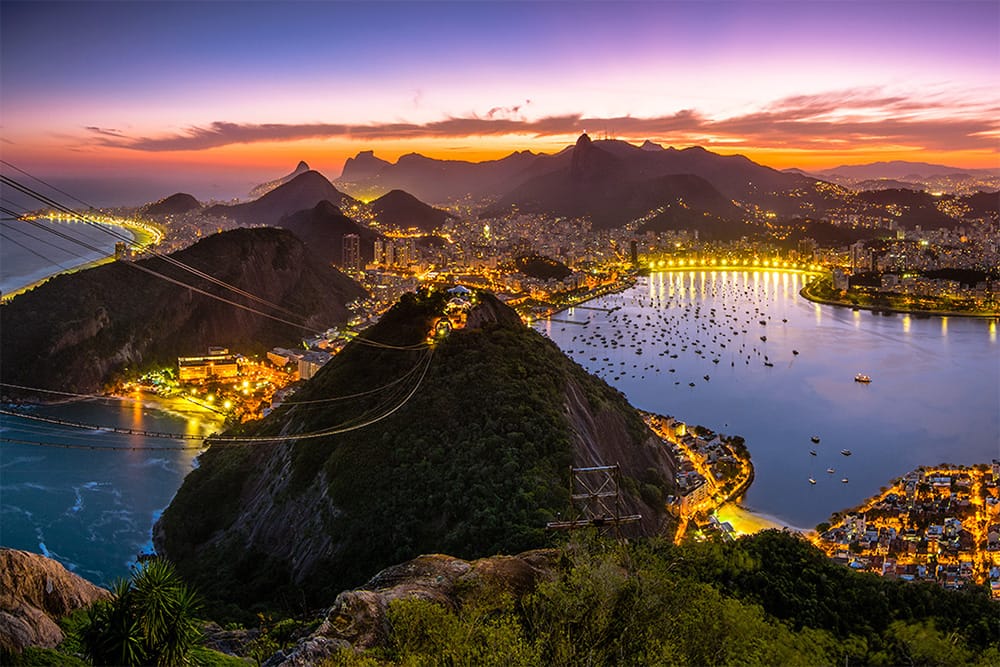
Rio needs no introduction, yet it still manages to surprise. Beyond the iconic silhouette of Christ the Redeemer and the golden curve of Copacabana Beach lies a city shaped by samba schools, street carnival blocos, and centuries-old Afro-Brazilian musical tradition. Carnival here isn’t a performance for tourists — it’s a living cultural inheritance, passed from generation to generation through drumbeats and dance. To walk through Rio is to walk through Brazil’s emotional history.
Salvador da Bahia — The Soul of Afro-Brazilian Heritage
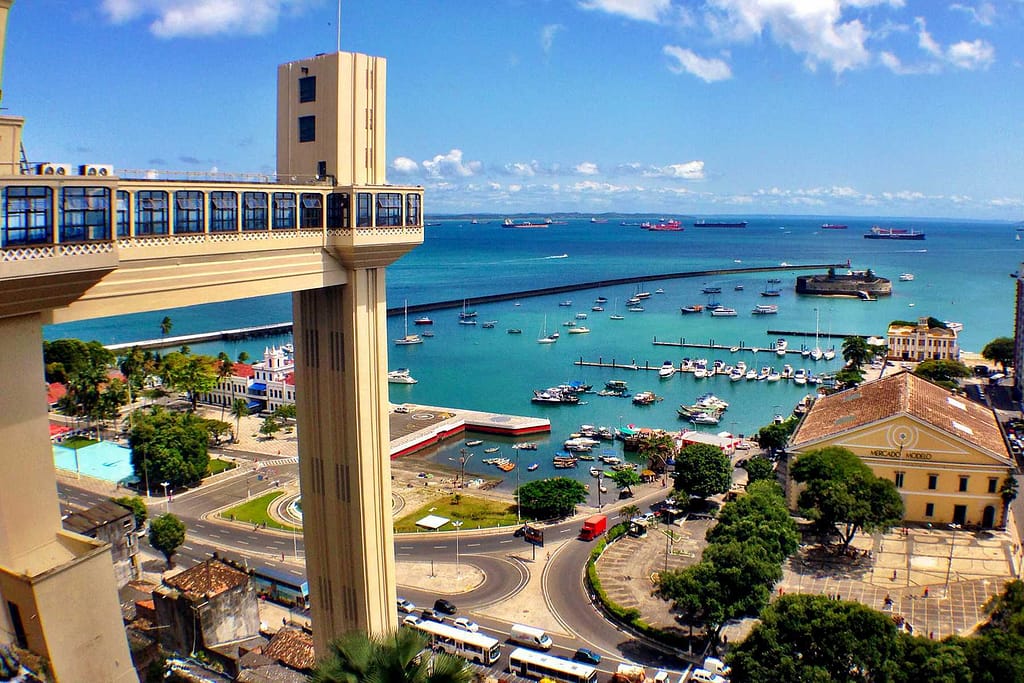
If Rio is Brazil’s heartbeat, Salvador is its soul. As the first colonial capital of Brazil and the historic center of the transatlantic slave trade’s cultural fusion, Salvador carries one of the richest Afro-Brazilian legacies in the Americas. Its Pelourinho district — a UNESCO World Heritage Site — is alive with capoeira circles, candomblé traditions, and colorful colonial architecture that tells a story of survival, identity, and celebration.
Ouro Preto — Brazil’s Baroque Time Capsule
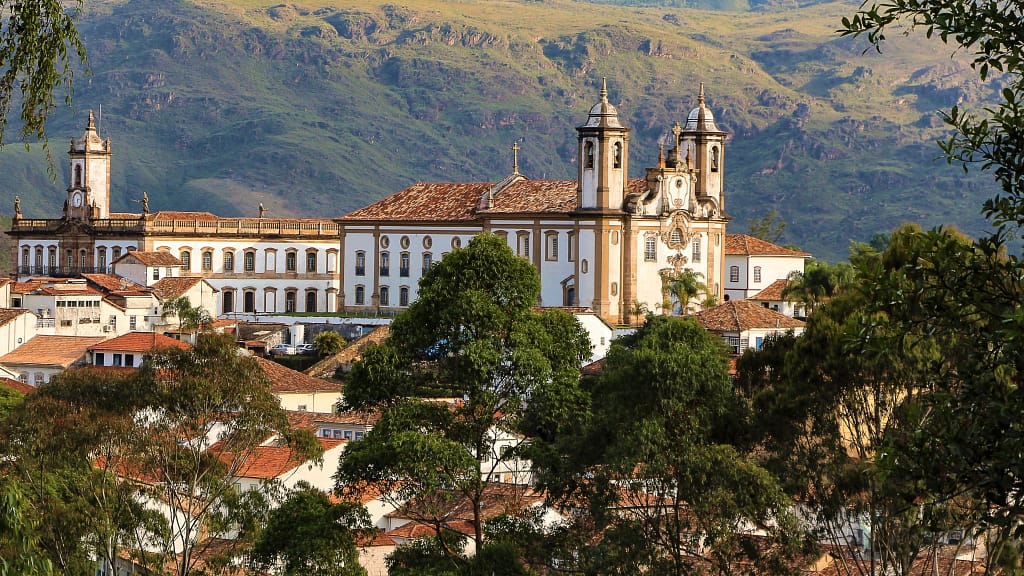
Tucked into the mountains of Minas Gerais, Ouro Preto feels like stepping into another century. Once the glittering center of Brazil’s 18th-century gold rush, this UNESCO-listed town is home to some of the most stunning Baroque architecture in South America — churches adorned with gold leaf, cobblestone streets winding uphill, and artistry left behind by sculptor Aleijadinho, one of Brazil’s most celebrated historical figures. It’s a destination for travelers who want history carved in stone.
The Amazon — Culture Rooted in the Earth
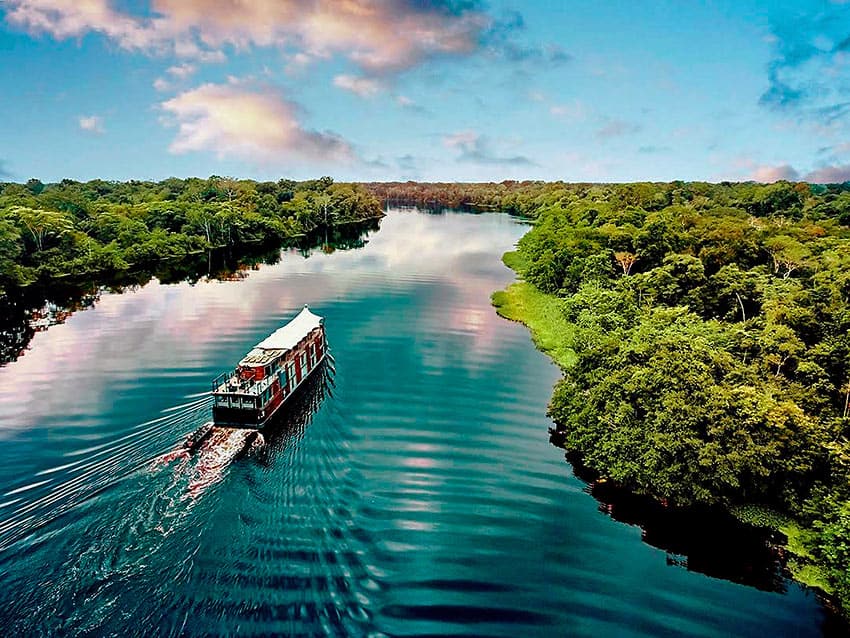
No conversation about Brazilian culture is complete without the Amazon — not just as a natural wonder, but as a living cultural landscape. Indigenous communities across the region continue to preserve traditions, languages, and knowledge systems that stretch back thousands of years. Responsible tourism here offers travelers something increasingly rare: a genuine connection to land and heritage, hand in hand with breathtaking biodiversity.
Fernando de Noronha — Paradise with Purpose
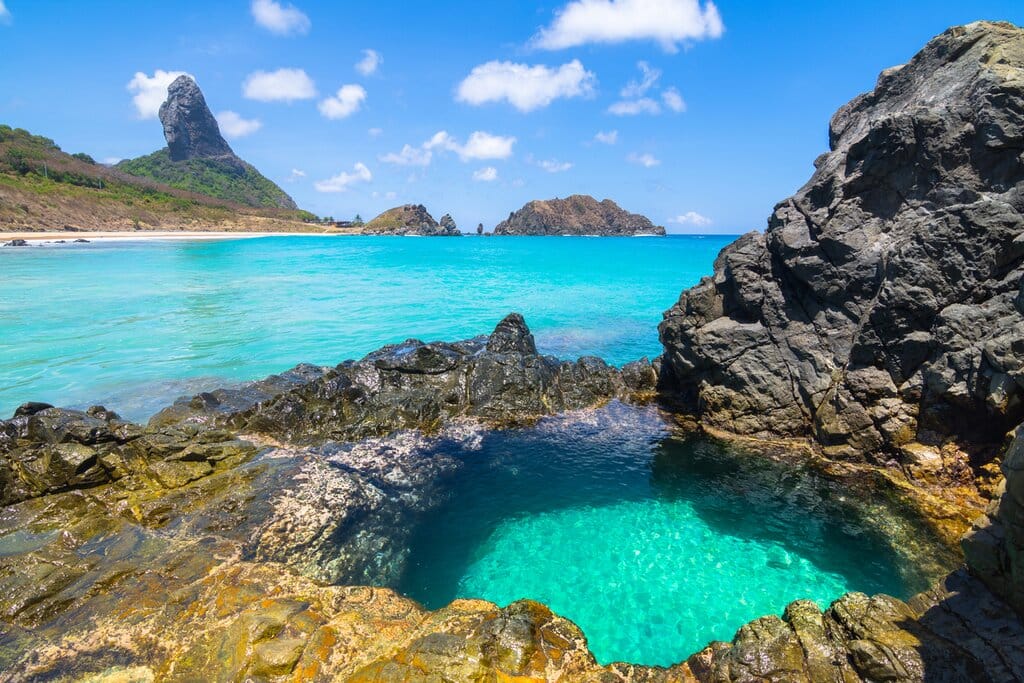
For travelers seeking natural beauty paired with conservation-conscious tourism, this remote island archipelago delivers turquoise waters, protected marine ecosystems, and a growing reputation as one of the most pristine destinations in the Southern Hemisphere — proof that Brazil’s appeal extends far beyond its cities.
A Story Still Being Written
Brazil’s tourism boom reflects something bigger than numbers on a report. It reflects a country confidently stepping into a new chapter — one where its culture, resilience, and diversity are finally being recognized on a global stage.
The 46% surge in visitors isn’t the finish line. It’s the opening act.
As more travelers discover that Brazil offers not just landscapes, but living history — echoing in drumbeats, carved into colonial stone, and rooted deep in the Amazon soil — this is a nation proving that authentic culture, when shared with the world, is one of the most powerful forces in travel.
Brazil isn’t just recovering. It’s rising — and inviting the world to rise with it.